
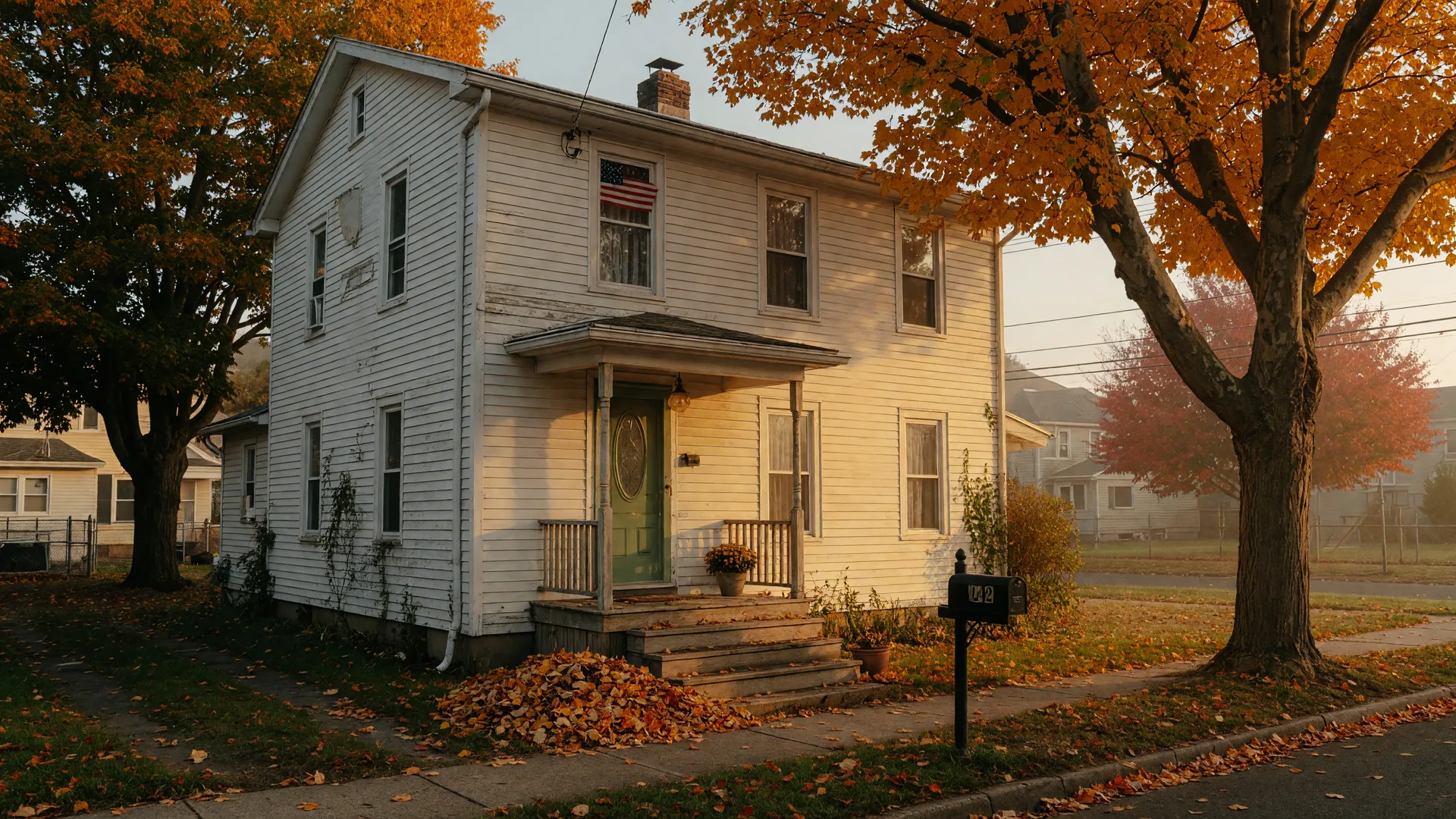
An Inherited House Has Three Different Values: The Probate Appraisal, the Tax Assessment, and the Market Value, Explained for North Jersey Heirs

Ask what an inherited house is worth and you will get three different answers: what the appraiser puts on it for the estate, what sits on the municipal tax bill, and what a buyer actually pays. They are different by design, and the heirs who keep them straight avoid tax surprises, stalled closings, and family fights. I am Johnny Rodriguez, a Certified Probate Specialist with over fifteen years guiding estate sales across Clifton, Paterson, Passaic, Woodland Park, Totowa, Haledon, and Garfield. Here is what each one is for, and the mistakes that cost heirs real money when they mix them up.
The Probate Appraisal: The Number the Law Cares About
The first number is the one the whole estate is built on: the fair market value of the house as of the date of death. A state-certified appraiser does this work under USPAP standards, and the number does two jobs. First, it sets your tax basis. Under the federal step-up rules, your basis in the house is its date-of-death value, not what your parents paid for it decades ago. Second, it is the value the New Jersey inheritance tax return is built on, and the return cannot be filed without the certified appraisal in hand.
The clock that matters here is the inheritance tax return. New Jersey gives the estate eight months from the date of death to file it and pay whatever tax is due, under N.J.S.A. 54:35-3. An extension adds up to four months to file, but the tax is still due at that eight month mark, and unpaid tax draws interest at ten percent a year. If everyone inheriting is a spouse, child, grandparent, or parent, you are Class A and owe no inheritance tax, which is the self-executing L-9 waiver most estate sales ride on. If a sibling, niece, nephew, or friend inherits, the full return with the appraisal goes to the Division of Taxation, and that takes months. Order the appraisal in week one, not the week an offer lands. My guide to who pays inheritance tax walks through the classes.
The Tax Assessment: The Number That Pays the Town
The second number is on your parent's tax bill, and it is not what the house is worth. New Jersey municipalities assess property to compute taxes, and between revaluations those assessments sit at a fraction of full market value. The state tracks the gap with the Director's Ratio, the Chapter 123 common level ratio for each town, and fairness is measured against that band, not a sale price. The assessment is a tax tool, and reading it as a value will misprice an inheritance or scare a family for nothing.
A sale does not, by itself, trigger a reassessment in New Jersey. Towns reset values when they run a town-wide revaluation or an annual reassessment program, not when a single deed records; the buyer's future taxes are the buyer's own conversation. What the assessment means for heirs is one practical thing: the bill keeps coming while the estate is open. The executor must keep paying taxes, insurance, utilities, and any mortgage from estate funds every month the house sits, and that carrying cost quietly eats an inheritance and is the strongest argument for a realistic price and a sale on a schedule. An assessment can be appealed, but for an estate on a sale timeline, pricing off the market beats fighting the town.
The Market Value: The Number a Buyer Pays
The third number is the one that matters at closing: what a buyer will pay today. It is set by recent closed sales of comparable houses in the same blocks and condition band, which for an estate home means as-is comps, not renovated ones. The market number can land above or below the date-of-death appraisal, and that is normal: the market may move between the death and the closing, or the condition may pull the sold price under the appraised value.
Here is where the two numbers interact, and the part heirs get wrong most. Your basis is locked at the date-of-death value, so a sale above that number produces a taxable gain, and the usual home sale exclusion does not help most heirs, who never lived in the house two of the past five years. Sell close to the date-of-death value, which most families do, and the gain is small or zero. The full math is in my step-up basis guide.
And the cleanout? It affects the sold price, not the basis. Emptying the house and light staging support the market number, but they do not change what the appraiser determined for the estate. My estate cleanout playbook covers the order of operations.
The Mistakes That Cost Heirs Money
Mistake one: pricing the listing off the tax assessment. The assessment is not market value, and pricing off the tax bill either sits hopelessly under market or scares buyers off with a number the records do not support. Price from sold comps.
Mistake two: using the sale price as the date-of-death value. If the market moved between the death and the closing, the difference is gain, and heirs who never get the certified appraisal cannot prove where the basis really sat. The appraisal is the receipt for the tax number.
Mistake three: missing the eight month inheritance tax clock. A late filing draws ten percent interest a year, and where the full return is required, the tax waiver that gates your closing cannot issue until it is done. The appraisal and the return are not paperwork to squeeze in later; they are the critical path.
Mistake four: skipping the appraisal for the accounting. The executor owes every beneficiary an accounting, and the house is usually the largest asset. An undocumented value invites disputes and opens the executor to personal risk; my executor liability guide lays out the exposure.
Mistake five: pricing a sibling buyout off the assessment. When multiple heirs share one house and one wants to keep it, the buyout should run off an independent appraisal at fair market value, not the tax bill. The family that agrees on the number in writing closes the buyout or the sale; the family that argues over the tax bill does neither. My family buyout guide walks the buyout math.
Get the Numbers in the Order That Closes
Week one: order the certified appraisal as of the date of death, pay the current tax bill from estate funds, order the preliminary title search, and open the estate bank account. Month one: file what the beneficiary classes require and price from as-is sold comps, with photos of an empty, clean house. Then each number does its own job: the appraisal settles the basis and the return, the assessment pays the town, and the market price closes the deal. I solve problems before they become deal killers, and this is the exact order I run for every estate I list across Passaic and Bergen County. My probate help page lays it out, and if your family is sitting on an inherited house in Clifton, Paterson, Passaic, Woodland Park, Totowa, Haledon, or Garfield, bring me the address and the paperwork, and I will show you the honest value and the timeline. The goal is not just to close, it is to help you win. Talk soon.
Trying to Make Sense of an Inherited House?
I am a Certified Probate Specialist who has guided estate sales across Passaic and Bergen County for over fifteen years. Bring me the death certificate and the address, and I will show you the date-of-death value, the tax clock, and what the house should sell for today. Free consultation, no pressure, completely honest.
Questions? Text Johnny.
Questions? Text or call Johnny Rodriguez at 973-390-7319. He answers fast and gives it to you straight, whether you are buying, selling, or sorting out an inherited property in North Jersey.
Keep reading
More guides from Johnny on buying, selling, and investing across North Jersey.
North Jersey's AI-Certified Realtor with 15+ years of experience. Specializing in probate sales, short sales, and distressed properties in Passaic and Bergen County.