
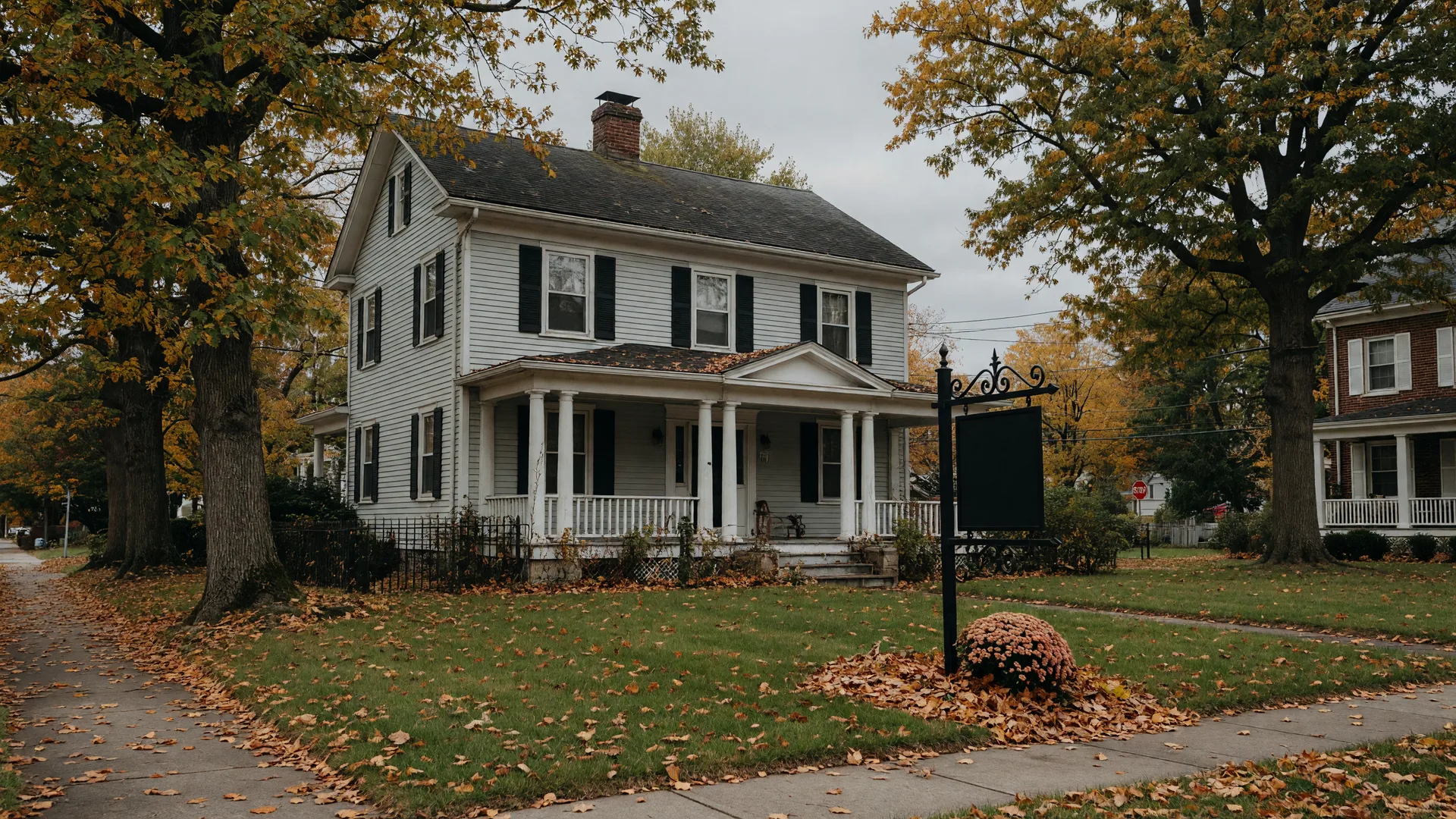
Who Actually Pays Inheritance Tax When Selling a Home Through Probate in New Jersey? A Complete Guide for Heirs in Passaic and Bergen County

I talk to families in Clifton, Paterson, Passaic, Totowa, Woodland Park, Haledon, and Garfield every week who are trying to sell an inherited home. And the question I hear more than any other is about taxes. How much does the state take? Do I owe anything if I am the child of the person who passed away? What is this tax waiver I keep hearing about and why is it delaying my closing? The confusion around New Jersey inheritance tax is the single biggest source of stress for heirs selling a probate property. And most of the stress comes from not having clear, straight answers. Here are the straight answers. I am not a tax attorney and nothing here replaces professional legal or tax advice, but after 15 years of handling probate sales in North Jersey, I can tell you exactly how the system works, who pays, who does not, and how the tax waiver process affects your timeline.
The First Thing Every Heir Gets Wrong About NJ Inheritance Tax
Most people think New Jersey has an estate tax that applies to every estate over a certain value. That used to be true, but it changed. New Jersey eliminated its estate tax effective January 1, 2018. There is no NJ estate tax anymore. But the inheritance tax is still in effect. And the inheritance tax is different from the estate tax in one critical way. The estate tax was based on the total value of the estate regardless of who inherited it. The inheritance tax is based on who receives the assets. Whether you owe tax when selling an inherited home in New Jersey depends entirely on your relationship to the person who passed away. Not on how much the house is worth. Not on how much money you make. Not on whether you are selling the house or keeping it. Just who you are to the deceased.
That distinction is the most important thing to understand. I have seen families lose weeks of sleep worrying about a tax bill they never had to pay because they assumed the inheritance tax was the same as the old estate tax. It is not. If you are a Class A beneficiary, you owe zero inheritance tax regardless of the value of the property. If you are a Class C or Class D beneficiary, you may owe tax depending on how much you inherit. And the rates and exemptions are different for each class.
Class A Beneficiaries: Zero Tax Owed, But the Waiver Still Applies
Under N.J.S.A. 54:34-2, Class A beneficiaries are the surviving spouse or domestic partner, children and grandchildren of any age, stepchildren, legally adopted children, parents, and grandparents of the deceased. If you fall into any of these categories, you owe zero New Jersey inheritance tax on anything you inherit. A house worth $800,000 in Clifton. A bank account with $200,000. An investment portfolio worth half a million. Zero tax. Period. The tax rate for Class A beneficiaries is permanently set at 0%. This is the single biggest relief factor for most families dealing with a probate sale in North Jersey. The children inheriting the family home in Paterson do not owe the state a penny on that house.
But here is where the confusion starts. Even though no tax is owed, the state still requires a tax waiver before the property can be transferred to a new owner at closing. The waiver is the state's way of confirming that no tax is owed. Without it, the deed cannot transfer and the sale proceeds cannot be distributed. For Class A beneficiaries, the waiver process is simple. The executor files a self-executing Form L-9 with the county clerk in the county where the deceased lived. The form states that all beneficiaries are Class A and that no inheritance tax is due. The county clerk processes the form and issues the tax waiver. In most Passaic and Bergen County Surrogate's Courts, this takes one to two weeks from filing. I have seen it take as little as three business days in Bergen County and as long as three weeks in Passaic County depending on the workload. The key is to file the Form L-9 early, ideally within the first month after receiving Letters Testamentary. Do not wait until you have an accepted offer to start this process. If you do, you will add two weeks to your closing timeline while you wait for the waiver.
Class C Beneficiaries: 11% to 16% on Inherited Value Over $25,000
Class C beneficiaries are siblings of the deceased, including half-siblings, and the descendants of siblings, which means nieces and nephews. If you inherit a home from your brother, your sister, your uncle, or your aunt, you are a Class C beneficiary. The inheritance tax treatment is different from Class A. The first $25,000 of the total inheritance from a Class C transferor is exempt from tax. Everything over $25,000 is taxed at 11% for siblings and 16% for descendants of siblings. Here is what that looks like on a real North Jersey property. Your aunt passes away and leaves you her home in Totowa valued at $480,000. As a Class C beneficiary, the first $25,000 is exempt. The remaining $455,000 is taxed at 16%. Your inheritance tax bill is $72,800. That is real money. And it is due before the estate can be closed and the proceeds distributed.
The tax is paid by the executor out of the estate before any distribution to beneficiaries. The executor files a formal inheritance tax return with the NJ Division of Taxation within 8 months of the date of death. The Division reviews the return, calculates the tax, and issues a tax waiver once the tax is paid or arrangements are made for payment. The review process takes roughly 90 days from submission. For Class C beneficiaries, the tax waiver process is the single biggest timeline factor in the probate sale. You cannot close on the sale until the waiver is issued. If you wait until you have an accepted offer to file the inheritance tax return, you will sit on that accepted offer for three months while the Division processes your paperwork. Buyers do not wait three months. They move on to the next property. I have seen it happen. The fix is to file the inheritance tax return as soon as the property appraisal is complete, not when you get an offer.
Class D Beneficiaries: 15% on Inherited Value Over $500
Class D beneficiaries are everyone else. Cousins, aunts, uncles, friends, business partners, charitable organizations that are not specifically exempt, and any other person or entity that is not Class A, Class C, or a specifically exempt organization. The exemption for Class D beneficiaries is minimal. The first $500 of the total inheritance is exempt. Everything over $500 is taxed at 15%. If you inherit a $350,000 home from a cousin in Passaic, the first $500 is exempt and the remaining $349,500 is taxed at 15%. That is a tax bill of $52,425. The same filing and waiver process applies as for Class C beneficiaries. A formal inheritance tax return must be filed with the NJ Division of Taxation within 8 months of the date of death. The Division takes roughly 90 days to process the return and issue the waiver. The tax must be paid before the waiver is issued. Planning ahead is not optional in these cases. It is the difference between a smooth closing and a deal that falls apart.
How the Tax Waiver Works at Closing
Let me walk you through exactly how the tax waiver affects a probate sale closing in North Jersey, because this is where the rubber meets the road. You accept an offer on an inherited home in Clifton. The buyer's attorney orders a title search. The title search reveals that the property is part of a probate estate. The title company requires a tax waiver from the NJ Division of Taxation before they will insure the title. Without title insurance, the buyer's lender will not fund the loan. Without funding, the sale does not close. The tax waiver is not optional. It is a mandatory document that the title company and the buyer's lender require before they will proceed with closing. Even if no tax is owed, as in the case of Class A beneficiaries, the waiver confirming that no tax is owed is still required.
Here is the practical impact. For Class A estates, the Form L-9 waiver takes one to three weeks. Plan for three weeks and be happy if it comes faster. For Class C and D estates, the tax return processing takes roughly 90 days from submission. Add two weeks for the waiver to issue after the return is processed. That is roughly 3.5 to 4 months from the date the tax return is filed to the date the waiver is in hand. If you file the return in month one after receiving Letters, the waiver arrives in month four or five. If you wait until month six to file the return, the waiver arrives in month nine or ten and your closing is pushed out by half a year. The math is simple. File early. Close on time.
What About Capital Gains Tax When You Sell the Inherited Home?
Inheritance tax is a state tax on the right to receive property from a deceased person. Capital gains tax is a federal tax on the profit when you sell that property. They are two completely different taxes and heirs confuse them all the time. Here is what you need to know about capital gains when selling an inherited home. When you inherit a home, you receive a stepped-up basis equal to the fair market value of the home on the date of death. That means if your mother bought her Clifton home for $150,000 in 1985 and it was worth $510,000 when she passed away, your tax basis is $510,000, not $150,000. If you sell the home for $520,000, your capital gain is $10,000, not $370,000. The step-up in basis eliminates the capital gains tax on virtually all of the appreciation that occurred during the deceased's lifetime.
The practical effect of the stepped-up basis is that most heirs who sell an inherited home owe little or no federal capital gains tax. The gain is calculated as the sale price minus the fair market value on the date of death minus the costs of sale such as the real estate commission, closing costs, and any capital improvements made by the estate. If the home sells within a reasonable time after the date of death and at a price close to the appraised value, the gain is usually minimal or even negative. Heirs who hold the property for a long time before selling, or who make significant improvements and then sell for a much higher price, may owe capital gains on the appreciation that occurs after the date of death. But for the typical probate sale where the home is sold within a year, the capital gains tax is usually zero or negligible.
New Jersey does not have a separate state capital gains tax. The state taxes capital gains as ordinary income under the New Jersey Gross Income Tax Act. The rate ranges from 1.4% to 10.75% depending on your total income. But again, for the typical heir selling an inherited home within a year of the date of death, the capital gain is small enough that the state tax is minimal. The estate also gets to deduct the real estate commission and any closing costs from the sale proceeds, which reduces the gain further.
The Inherited Home Tax Return Filing Deadlines
Missing tax filing deadlines creates problems that cost estates real money. Here are the two deadlines every executor needs to know. The NJ inheritance tax return must be filed within 8 months of the date of death. That is 8 months from the day the person passed away, not 8 months from when you received Letters Testamentary or 8 months from when the property sold. If the return is filed late, the executor faces penalties and interest on any tax due. The penalty is 5% of the unpaid tax per month, up to a maximum of 50%. The interest rate on unpaid inheritance tax is set annually by the NJ Division of Taxation. In 2026, the interest rate is approximately 6% per year, compounded daily. These penalties add up fast. A $50,000 tax bill that is 4 months late accrues $10,000 in penalties plus interest. That comes out of the estate, which means the beneficiaries get less.
The federal estate tax return, Form 706, is only required for estates valued at more than the federal exemption amount. For deaths in 2026, the federal estate tax exemption is approximately $13.99 million per individual. The vast majority of estates in Passaic and Bergen County fall well below that threshold. Even the most expensive homes in Clifton and Woodland Park rarely push an estate above $14 million. If the estate is under the federal exemption, no federal estate tax return is required and no federal estate tax is owed. The estate still needs to file the decedent's final federal income tax return, Form 1040, for the year of death. And if the estate earns any income during the probate period, such as interest on the estate bank account or rental income from the property before it sells, the estate must file a separate fiduciary income tax return, Form 1041.
Common Tax Mistakes Executors Make in North Jersey Probate Sales
I have worked with dozens of executors in Passaic and Bergen County who made preventable tax mistakes that cost the estate money and delayed the closing. Here are the most common ones. Mistake one is assuming all beneficiaries are Class A when they are not. A stepchild who was never legally adopted is not a Class A beneficiary. A niece or nephew is not a Class A beneficiary. If the will leaves the house to the deceased's sibling, that sibling is Class C, not Class A. The tax treatment is different and the filing requirements are different. If the executor files a Form L-9 for a Class C estate, the Surrogate's Court will reject it and the executor will lose weeks or months.
Mistake two is filing the inheritance tax return late. The 8-month deadline from the date of death is firm. I work with executors who file the return on time even when the home has not sold yet, filing it based on the appraised value so the waiver is ready when an offer comes in. That is the right approach. Mistake three is forgetting to file the decedent's final personal income tax return. The estate is responsible for filing the deceased person's final Form 1040 for the year they died. If the deceased was receiving Social Security, pension, or investment income in the year of death, that income is taxable and must be reported. If the estate has rental income from the property before it sells, that income goes on the estate's Form 1041, not the final personal return. A CPA who is familiar with estate tax filings can handle this easily. Do not try to do it yourself. The forms are straightforward but the penalties for errors are not.
How to Avoid Tax Surprises When Selling an Inherited Home
The best way to avoid a tax surprise is to know your beneficiary class on day one. Before you list the property for sale, before you accept an offer, before you do anything else, confirm whether you are Class A, Class C, or Class D. The estate attorney the executor hires will handle this determination. The probate-specialist realtor should also understand the beneficiary class system and how it affects the sale timeline. If you are Class A, the process is simple. File the Form L-9 early. Close on time. If you are Class C or D, file the inheritance tax return as soon as the appraisal is done. Do not wait for an offer. The return can be amended later if the actual sale price differs from the appraised value. The goal is to get the waiver process started. Every week you wait is a week added to the back end of the sale timeline.
And here is something most people do not know. The inheritance tax is due within 60 days of the date the waiver is issued. If the estate does not have enough cash to pay the tax because the home has not sold yet, the executor can request an extension or enter into an installment payment agreement with the NJ Division of Taxation. The Division is generally reasonable about working with estates that have a pending sale. But you have to ask. Do not assume an extension will be granted automatically. File the request in writing, explain the situation, and provide documentation showing that the property is under contract or actively marketed for sale.
The Bottom Line
New Jersey inheritance tax is confusing but the rules are clear once you understand the beneficiary class system. Class A beneficiaries owe zero tax but still need a tax waiver. Class C beneficiaries owe 11% to 16% on inherited value over $25,000. Class D beneficiaries owe 15% on inherited value over $500. The tax waiver process is the single biggest timeline factor in a probate sale for Class C and D estates. File the return early. Do not wait for an offer. And remember that the stepped-up basis eliminates most capital gains tax when selling an inherited home within a reasonable time after the date of death. The heirs who handle tax matters correctly get to closing faster, keep more of the proceeds, and avoid the stress of surprise bills. The heirs who wait and guess pay the price in delays, penalties, and frustration.
I have been handling probate sales in Clifton, Paterson, Passaic, Totowa, Woodland Park, Haledon, Garfield, and throughout Passaic and Bergen County for 15 years. I am a Certified Probate Specialist and I understand how the inheritance tax system works in practice, not just in theory. If you are an executor or an heir trying to sell an inherited home and you are not sure what taxes apply or how the waiver process works, call me. I will walk you through it step by step and connect you with professionals who can handle the legal and tax side of the transaction. No pressure. Just the information you need to make the right decision for your family.
Selling an Inherited Home in North Jersey?
I will walk you through the entire process, help you understand the tax implications, and connect you with a probate attorney who can handle the legal side. Free consultation, no pressure, completely honest.
North Jersey's AI-Certified Realtor with 15+ years of experience. Specializing in probate sales, short sales, and distressed properties in Passaic and Bergen County.