
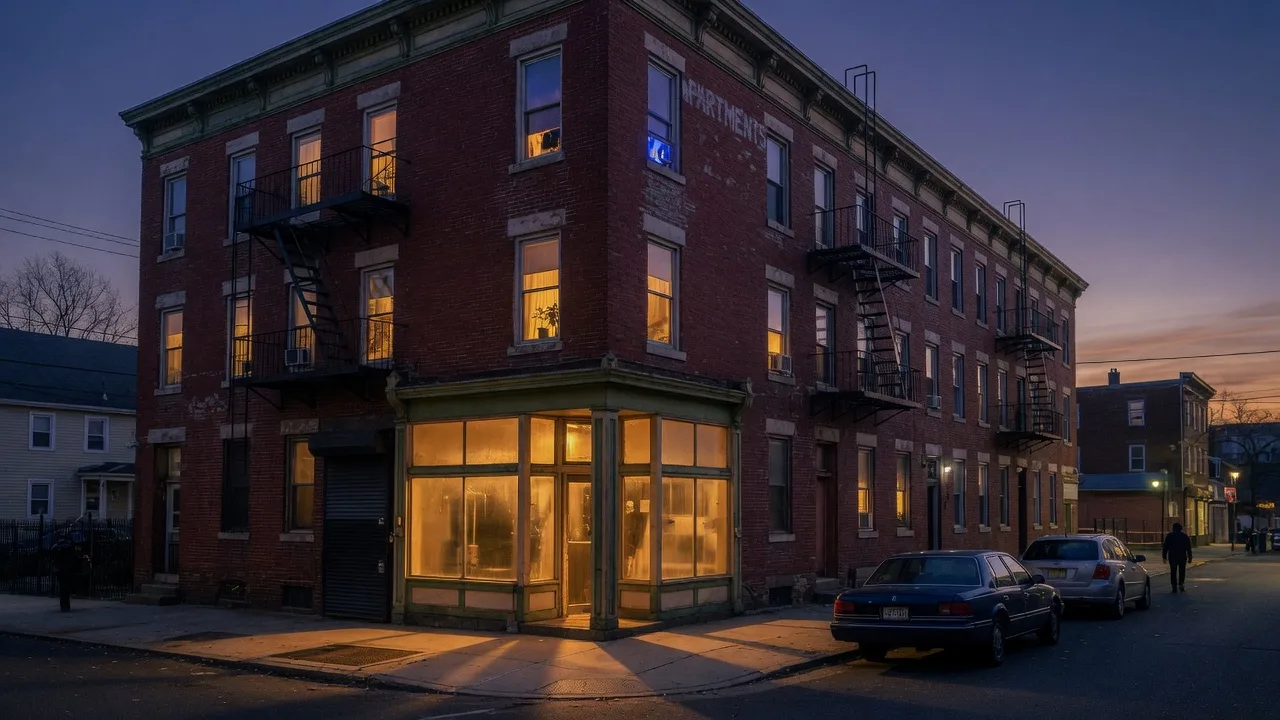
Mixed-Use Investing in North Jersey: Storefront Below, Apartments Above

A mixed-use building is the same multi-family math with a storefront under it, and across downtown Clifton, Passaic, and Paterson it is the deal most North Jersey investors never run. The apartments carry long-term residential demand and a rent roll you can verify. The storefront carries a second rent, often on a longer lease, and it sits completely outside the rent control caps that limit the units above. The financing is stricter, the reserve is bigger, and the rewards go to investors who underwrite the whole building, not just the apartments. Here is how these deals actually work.
Where the Stock Lives: The Main Streets
The mixed-use building is not an exotic product type in Passaic County; it is the default shape of every old downtown. Downtown Clifton's Main Avenue corridor runs from the Passaic city line to the Route 46 overpass, with Clifton Avenue from First to Lexington Avenue, and it holds roughly 250 businesses, almost all of them storefronts with apartments above. Historic Botany Village is the same story a few blocks over. Passaic's Main Avenue corridor carries a 2021 redevelopment plan that allows up to eleven ten-story mixed-use buildings with retail ground floors between Pennington Avenue and Monroe Street. Paterson's Main Street and Market Street hold blocks of three and four-unit buildings with storefronts. When you drive these corridors, you are looking at inventory, not scenery.
The 51% Rule Decides Your Financing
Lenders split mixed-use buildings by how much of the square footage is residential. When at least 51% of the building is residential, it can be financed through residential-style DSCR programs: no W-2 requirement, underwriting on the property's income, about 20% to 25% down, and loan sizes up to roughly $4.5 to $5 million. A DSCR around 1.20 is the common New Jersey target: net operating income should run about 20% above the loan payment. When the commercial space dominates, the building is underwritten as a commercial loan: 20% to 35% down, five, ten, or twenty year terms with twenty to twenty-five year amortization.
There is one exception worth knowing by heart. If you live in a unit, FHA will finance a 3.5% down purchase on a mixed-use building that is at least 51% residential. That is house hacking a storefront building, and it is how first deals get built in Passaic County. Most investors never ask about it because they assume mixed-use means commercial only. It does not.
The Rent Roll Is Two Businesses, Not One
The apartments price at market rent like a plain two-family: Clifton units run roughly $2,000 to $2,400 a month, Paterson averages near $1,700 with two-bedrooms around $2,000, and Passaic sits near $1,787. The storefront is a different animal. It leases on commercial terms, typically terms measured in years, sometimes net of utilities, insurance, and maintenance. Rent control does not touch it. Paterson caps annual residential increases at 5%, Passaic at 3% with no vacancy reset, and Clifton around 3% on larger buildings, but those caps stop at the storefront door. The commercial space prices to market at every lease renewal, and that is the quiet upside of the product type.
Rebuild the net operating income from both rolls before you trust the flyer. Budget 40% to 45% of gross rent for taxes, insurance, vacancy, and repairs, add a reserve of about 1% of value a year, and underwrite the storefront turn. When a shop lease ends, you can sit empty for three months while a new tenant fits out. That vacancy costs more than any apartment vacancy in the building, and it is the line that separates a working deal from a painful one.
Run the Model Before You Love the Building
Here is the honest math on a typical Paterson three-unit with a storefront. Take a building listed around $520,000. The storefront rents at $1,800 a month, $21,600 a year. Two apartments rent at $1,700 and $1,900, another $43,200. Gross rent is $64,800. Expenses at 42% are about $27,200, leaving net operating income near $37,600, a cap rate around 7.2% at that price. A DSCR loan at 25% down, $390,000 financed at about 7.25% over 25 years, runs roughly $2,820 a month, about $33,800 a year. That leaves near $3,800 a year in cash flow on $130,000 down, about 3% cash-on-cash. The building is not a broke deal and it is not a rich one. It is a starting point.
That is why the wins come from the three moves that apply to every multi-family deal in North Jersey: buy below list, push the storefront to market rent at renewal, or take the FHA owner-occupied path at 3.5% down where the rents nearly cover the payment. My multi-family analysis guide walks the full framework, and my line by line cash flow model is the spreadsheet to run this exact scenario on. The model is the same; the storefront just changes the inputs.
The Exit Is Different, and the Risks Are Bigger
The exit is where mixed-use behaves like real estate instead of rentals. A leased-up storefront building sells as an income property to another investor, and a 1031 exchange keeps the tax bill away while you move into a larger building, which my tax strategy guide details. When the storefront goes vacant, you lose a quarter to a third of the gross rent at once, so a mixed-use building needs a real vacancy reserve. Zoning has to allow the use, the certificate of occupancy has to match reality, and the commercial leases matter: who pays the roof, who maintains the sidewalk, what the options say. Read the leases and the zoning before the inspection, not after.
What Sits on the Market Right Now
Storefront mixed-use listings across the three cities run from about $520,000 to $2.5 million. Paterson has three-unit-with-storefront buildings asking around $519,900 to $699,000, and larger commercial residential buildings from about $1.4 million. Clifton's Main Avenue blocks list storefront buildings around $825,000 to $999,000, with larger corner properties above $1.5 million. Passaic's downtown storefronts list from about $1.35 million up toward $2.5 million. Those are asking prices, not closed sales. Every one is priced off a rent roll, so a building whose storefront rent sits far below market is where the value hides.
Mixed-use is the missing category in most North Jersey investor playbooks, and it sits on the main streets of Clifton, Paterson, Passaic, Woodland Park, Totowa, Haledon, and Garfield, the towns I work every day. Run the model, respect the storefront vacancy, and price the rent roll honestly, and a three or four-unit with a storefront becomes a portfolio chapter instead of a skipped listing. Send me an address and I will run the comps and the cash flow with you. The goal is not just to close, it is to help you win. Talk soon.
Want to Run the Numbers on a Mixed-Use Building?
I work these corridors every day, from Main Avenue in Clifton to Main Street in Paterson. Bring me the address and I will pull the comps, the rent roll, and the real cash flow before you make an offer. Free consultation, no pressure.
North Jersey's AI-Certified Realtor with 15+ years of experience. Specializing in probate sales, short sales, and distressed properties in Passaic and Bergen County.