
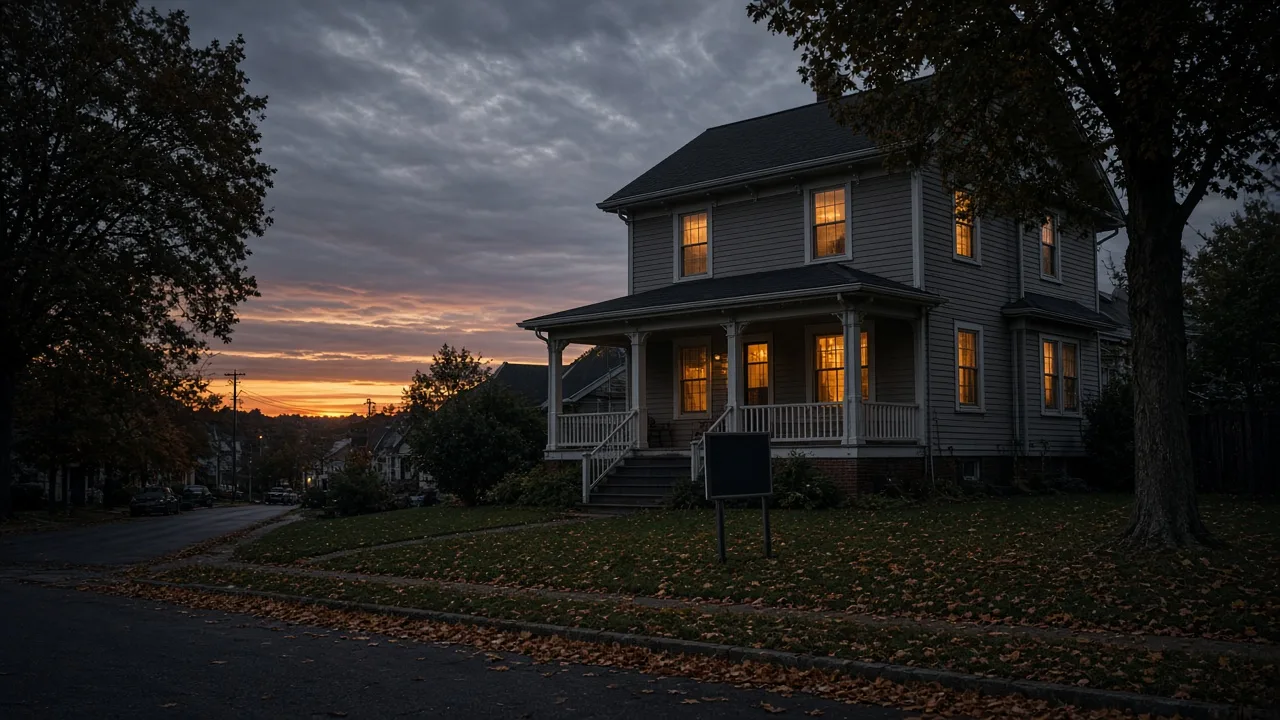
Your Tax Assessment Is Not Your Home Value: What North Jersey Sellers Get Wrong When They Price Off the Card

The number on your tax card is not what your home is worth, and pricing off it is one of the most expensive mistakes a North Jersey seller can make. New Jersey assesses every property at a fraction of its market value, never at full value, so the assessed number can read 40, 50, even 60 percent below what a buyer will actually pay. I am Johnny Rodriguez, North Jersey's first AI-Certified Realtor with Realty One Group Legend in Clifton. Over 15 years in Passaic and Bergen County I have seen sellers list off the assessment and leave money on the table.
New Jersey Assesses Low on Purpose
In most states a home's assessed value sits somewhere near what it might sell for, and homeowners assume the same holds here. It does not. New Jersey has no statewide reassessment requirement in every town, so most municipalities keep assessments frozen at a fraction of current value while market value climbs. The official number that converts the assessment to market value is the assessment-to-market ratio the Division of Taxation uses for each town each year, called the equalization ratio. It is the entire translation key. Read the ratio wrong and every conclusion you draw from the card is wrong.
What the Ratio Actually Looks Like in Our Towns
The 2025 Division of Taxation ratios set the pattern for the towns I work every week. Clifton assesses at roughly 36% of market value, so a $150,900 assessment on the card represents a home really worth about $421,000. Paterson runs near 45%, at an equalization ratio around 45.38%: an assessed number around $236,000 translates to a market value near $524,000. Passaic sits close to 46% on average, and the records I see run around a 45 to 50% ratio. If you looked at your card, saw a number one-third the size of seemingly identical homes selling down the street, and assumed your card was right and the neighborhood was wrong, that is the mistake. The card is the wrong frame. The sale prices are the reality.
Why the Assessed Number Still Misleads
Three things make the assessed number worse than useless on its own. First, the ratio differs by town and changes year to year, so you cannot apply Clifton's 36% to a Paterson home. Second, the ratio is a town average, so a specific home can sit well outside it when it was last reassessed or improved. Third, even within the same town the assessment is a tax tool, not a valuation. It exists to split the tax bill fairly, not to tell a buyer what to pay, and it lags the market by years. Nobody prices a home for sale from the tax roll, and the agent who tells you otherwise is not reading the market.
How a Real Agent Prices a Home in This Market
Pricing starts with comparable sales that closed in the last few months on homes of similar size, condition, and lot, on your street if possible, in your town if not. Then it adjusts for what a buyer actually pays for: square footage, bedrooms and baths, a finished basement, central air, the roof, the heat. Then it weighs the demand. In late 2026 the two counties are not moving in lockstep. Passaic County's median sale price sat near $584,692 in September, down about 2.6%, with homes selling at about 103.4% of list and a fast median of about 33 days. Bergen County's median ran higher near $761,000 in October, down about 1.2%, with a single-family median around $835,000 and a slower market at 63 to 73 days. Same region, different buyers, different speed. That is why a zip-wide guess fails and a sale-priced comp in your own town wins.
The Cost of Pricing Off the Card
Pricing off the assessment cuts both ways, and both hurt. Underprice by treating the assessed number as the value, and you hand a buyer thousands in instant equity the first weekend. Overprice by adding your markup to a card you did not convert correctly, and you sit on the market while listings accumulate price reductions. The warning signs are already in the data: a meaningful share of Bergen County listings carried price reductions through early fall 2026, some estimates near 22% on the Altos number versus about 9.6% on the Redfin count, and in a market that is no longer the 2021 free-for-all, an overpriced home gets cut and then sells below a correctly priced comp. The correctly priced home wins week one; the one priced off a misread card loses twice.
When the Assessment Is Actually Useful
The card is not useless, it is just a tax document. It matters for exactly one reason to a seller: your tax bill, and whether your assessed value is fair relative to neighbors. If your assessment reads well above similar homes in your town, you may be overtaxed, and New Jersey's Chapter 123 rules protect you: an appeal succeeds when an assessment falls more than 15% outside the corridor around your municipality's ratio. That is an appeal conversation, about the tax you pay every year, not the price a buyer will pay. The assessment helps lower your bill; it never sets your list price. My property tax appeal guide walks the whole process, and the current relief programs, including the ANCHOR benefit, are in my property tax relief guide.
Let the AI Read the Card for You
This is where my AI certification pays you directly. When I price a home, I do not read the assessment as a value. I pull the town's current ratio, convert it to a market estimate as a cross-check, then build a comparable-sales valuation from this week's closed deals, and I run all three against each other so no single number can mislead you. It is the math done before you sign, and it is why my pricing guide for Passaic County rests on real comps, not on the tax roll.
The Bottom Line
Your tax assessment is a fair-share-of-taxes number, not a price tag. Correctly converted, it can check your tax bill and signal overassessment for an appeal. It does not tell you what a buyer will pay, and in late 2026, in a Passaic market where homes still go for 103% of list in about a month and a Bergen market where they need more time, pricing off the card can cost you thousands in one direction and months in the other. Get the real number from the comps, the ratio, and the demand, and list where the buyer pool actually is. I solve problems before they become deal killers. The goal is not just to close, it is to help you win. Talk soon, Johnny.
Find Out What Your Home Is Actually Worth
Bring me the address and I will convert your assessment to the honest market number, pull this month's comps from Passaic and Bergen County, and show you where the buyer pool really is before you pick a price. Free valuation, straight answers, no pressure. And if this helped a friend who is pricing a home, send it to them. Talk soon, Johnny.
Questions? Text Johnny.
Questions? Text or call Johnny Rodriguez at 973-390-7319. He answers fast and gives it to you straight, whether you are buying, selling, or sorting out an inherited property in North Jersey.
Keep reading
More guides from Johnny on buying, selling, and investing across North Jersey.
North Jersey's AI-Certified Realtor with 15+ years of experience. Specializing in probate sales, short sales, and distressed properties in Passaic and Bergen County.