Why Investors Are Buying Multi-Family in Passaic County | 2026

Passaic County has quietly become one of the strongest multi-family investment markets in the New York metro area. Over the past several years, investors from across the region have been acquiring duplexes, triplexes, and small apartment buildings in towns like Clifton, Paterson, Passaic, Woodland Park, and Totowa. And for good reason. The combination of strong rental demand, affordable entry prices, close proximity to Manhattan, and steady property appreciation makes this county a standout for anyone looking to build long-term wealth through real estate.
I have been helping investors evaluate and acquire multi-family properties throughout North Jersey for over 15 years. I grew up in Paterson, I invest here myself, and I have watched this market evolve from overlooked to highly competitive. Here is a detailed breakdown of why Passaic County continues to attract serious investor capital.
Strong Rental Demand and Population Density
Passaic County is one of the most densely populated counties in New Jersey, with over 520,000 residents packed into roughly 185 square miles. Cities like Paterson and Passaic have population densities that rival major urban centers. That density translates directly into rental demand.
The county has a large renter population. Many families, young professionals, and service workers prefer renting over buying, either because of affordability constraints, immigration status, or simply lifestyle preference. Vacancy rates for well-maintained multi-family properties in Passaic County remain consistently low. When you own a properly managed rental property in Paterson or Clifton, you are not struggling to find tenants. The demand is already there.
This is especially true for two-bedroom and three-bedroom units, which serve families that cannot find or afford single-family homes in the current market. As home prices continue to rise across North Jersey, more households turn to rentals, and multi-family buildings absorb that demand.
More Affordable Entry Points Than Bergen County
Here is the price comparison that drives many investors toward Passaic County. As of 2026, the median home price in Bergen County sits around $946,000 for single-family and about $873,000 across all home types. In Passaic County, the median sits around $612,000 to $640,000. That gap is significant when you are buying multi-family properties.
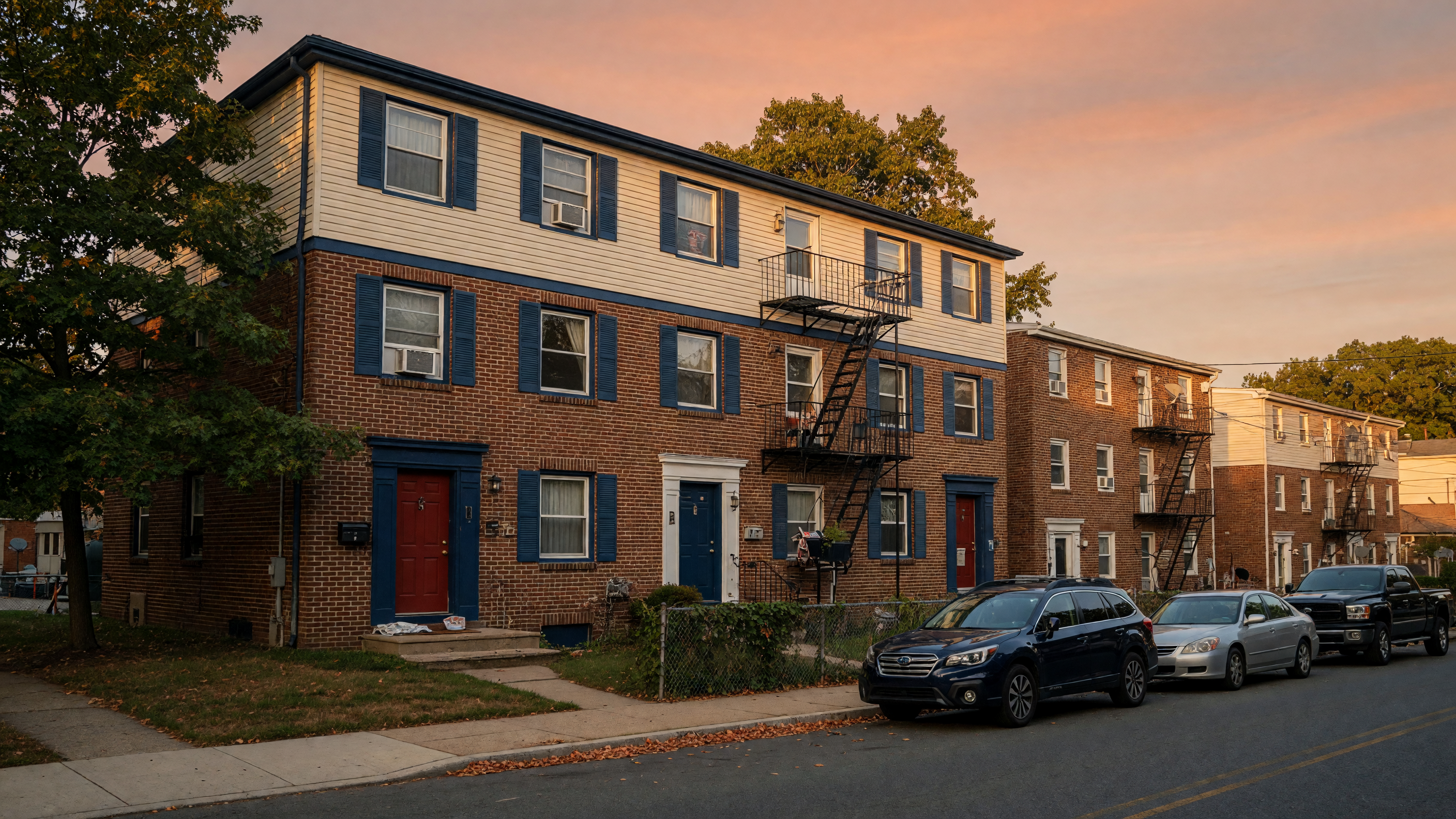
A two-family home in Paterson or Passaic might sell between $400,000 and $550,000 depending on condition and location. Similar properties in Bergen County towns like Hackensack, Teaneck, or Fort Lee often command $650,000 to $900,000 or more. In Clifton, which bridges the two counties in terms of pricing, multi-family properties typically trade between $500,000 and $700,000.
Lower acquisition costs mean lower financing requirements, better cash-on-cash returns, and more room for forced appreciation through value-add strategies. For new investors getting started or experienced investors expanding their portfolios, Passaic County offers a much more accessible entry point without sacrificing rental income potential.
Proximity to New York City and Major Transportation
Location is the single greatest advantage Passaic County holds. The southern towns of the county sit just 15 to 25 miles from Midtown Manhattan. Paterson, Clifton, and Passaic all offer NJ Transit bus and rail connections into Penn Station and Port Authority. Routes 46, 3, 19, 80, and the Garden State Parkway provide direct vehicular access to the city and the broader regional highway network.
This commuter convenience means your tenant pool extends far beyond the local population. Many renters in Passaic County work in Manhattan, Jersey City, or Hoboken, and they choose these towns because the commute is manageable and the rent is significantly lower than what they would pay closer to the city. As remote and hybrid work arrangements continue, some tenants are choosing to live further from Manhattan for more space, and Passaic County hits that sweet spot between affordability and accessibility.
Transportation infrastructure also protects property values. Towns with reliable transit connections tend to hold value better during market downturns and appreciate faster during upswings. This is a long-term advantage that benefits investors who buy and hold.
Property Appreciation Trends
Passaic County has experienced steady appreciation over the past decade. Home values in Clifton have risen from roughly $350,000 to over $500,000 in that span. Paterson has seen similar growth trajectories in many neighborhoods, with median list prices climbing from the low $200,000s to around $410,000 in 2026. Woodland Park and Totowa, which have always commanded slightly higher prices, continue to appreciate as demand for suburban living near the city intensifies.
Multi-family properties benefit from appreciation in two ways. First, the underlying asset increases in value, building equity over time. Second, as property values rise across the neighborhood, rents tend to follow. That means your rental income grows alongside your equity, compounding your returns year after year.
No market goes up in a straight line, and I never promise specific returns. But the fundamentals supporting Passaic County appreciation remain strong: limited housing supply, persistent demand, population density, and geographic proximity to one of the largest economic centers in the world.
Cash Flow Potential and ROI Considerations
Rental rates in Passaic County cities like Clifton generally average between $2,400 and $3,100 for two-bedroom units, with one-bedroom apartments typically around $2,100 and larger units reaching $3,000 to $4,000 depending on condition and location.
Let me walk through a simplified example. Say you purchase a two-family home in Paterson for $450,000 with 25 percent down ($112,500). Each unit rents for $2,200 per month, producing $52,800 in annual gross income. After accounting for property taxes (roughly $12,000 to $15,000 annually in Paterson), insurance ($2,500 to $4,000), maintenance reserves (typically 5 percent of gross rents), vacancy allowance (5 percent), and mortgage payments, you might net $15,000 to $25,000 per year in cash flow depending on your financing terms. That puts your cash-on-cash return in the 13 to 22 percent range, which is strong by any measure.
Cap rates in Passaic County multi-family properties can range from 6 to 9 percent or higher for well-managed buildings. Investors focused on cash flow typically target properties with cap rates above 7 percent, and those deals still exist in towns like Paterson, Passaic, and Haledon.
How to Evaluate a Multi-Family Property
Buying a multi-family property is not the same as buying a home to live in. The evaluation process is fundamentally financial, and you need to understand a few key metrics before making an offer.
Net Operating Income (NOI)
This is the income the property produces after operating expenses but before debt service. Calculate it by taking gross rental income and subtracting property taxes, insurance, maintenance, property management fees, vacancy allowance, and utilities you pay. Your NOI tells you what the property actually earns on its own.
Cap Rate
Cap rate equals NOI divided by purchase price. A property with $40,000 in NOI purchased for $500,000 has an 8 percent cap rate. This metric allows you to compare properties across different towns and price points on an apples-to-apples basis. Higher cap rates generally indicate better cash flow relative to purchase price, but they can also signal higher risk areas.
Tenant Quality and Lease Terms
If you are buying an occupied property, review every existing lease. How long have the current tenants been in place? What are they paying compared to current market rents? Are they on month-to-month or fixed-term leases? A building with long-term tenants paying below-market rent can represent a major opportunity to increase income through lease renewals at market rates, but it also requires careful legal compliance and proper notice.
Physical Condition
Older multi-family buildings in Passaic County often need updates. Budget for big-ticket items like roofs, boilers, electrical panels, and plumbing. I always recommend a thorough inspection on multi-family acquisitions, and I connect investors with contractors who can provide realistic renovation estimates before closing.
The Bottom Line
Passaic County multi-family properties offer a compelling mix of affordable pricing, strong rental demand, commuter-friendly location, and steady appreciation. The investors who are succeeding here are the ones who do their homework, buy right, manage well, and think long term. This is not a get-rich-quick market. It is a build-wealth-consistently market, and that is exactly the kind of investment I prefer.
I have spent over 15 years helping investors identify, evaluate, and acquire multi-family properties throughout Passaic and Bergen County. I know the neighborhoods, the numbers, the landlords, and the market dynamics block by block. If you are considering a multi-family investment in North Jersey, whether it is your first property or your tenth, I am the person to talk to before you make your next move.
Ready to Explore Investment Opportunities?
Let's sit down and talk about your investment goals, your budget, and what is available in today's market. I can run the numbers on specific properties, connect you with investor-friendly lenders, and help you find the right deal. No pressure, no hype. Just honest analysis and local expertise.
Schedule an Investment Consultation North Jersey's AI-Certified Realtor with 15+ years of experience. Specializing in probate sales, short sales, and distressed properties in Passaic and Bergen County.