
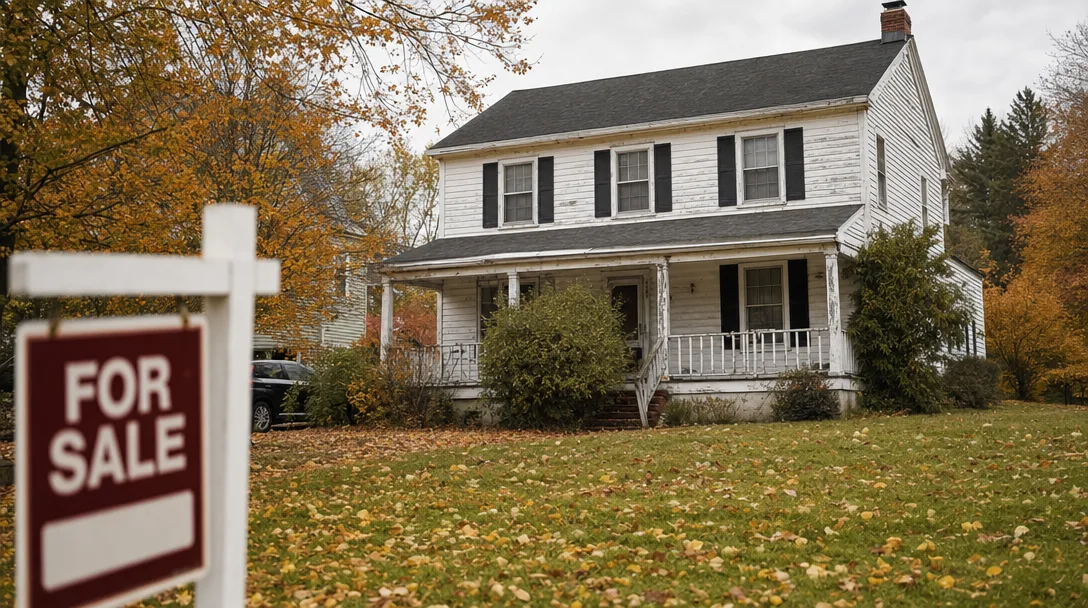
The First 30 Days After Inheriting a Home in North Jersey: A Step-by-Step Action Plan for Heirs

You just inherited a home in North Jersey. Maybe it is your parents' house in Clifton where you grew up. Maybe it is an aunt's two-family in Paterson that you only visited a few times. Maybe it is a property in Passaic or Totowa that has been in the family for 40 years and nobody has touched since the funeral. Right now you are overwhelmed. You do not know what to do first, who to call, or how long any of this takes. I am a Certified Probate Specialist with 15 years of experience handling estate sales in Passaic and Bergen County. I have walked hundreds of families through this exact moment. And the single most important thing I can tell you is this: the first 30 days determine whether the estate sale goes smoothly or turns into a six-month nightmare. Here is exactly what to do, week by week, from the day you learn you are responsible for the property.
Week One: Secure the Property and Get the Documents
Your first week is not about selling anything. It is about protecting what you have inherited. Start with the practical things nobody tells you about. Change the locks. I know that sounds dramatic, but you have no idea who has copies of the key. A neighbor who was helping out. A home health aide. A contractor who did work five years ago. A relative who is not named in the will. The cost to rekey a house in North Jersey is about $100 to $200. It is the cheapest insurance you will ever buy. Walk through every room and take photos of everything. Before you move anything, clean anything, or throw anything away, document the condition of the property as it is right now. These photos protect you later if a beneficiary questions whether something was removed or damaged. Also take photos of any valuable items, heirlooms, jewelry, antiques, or collectibles. You are not doing this because you suspect anything. You are doing this because estate disputes happen when memories fade and nobody can remember what was in the house. Photos are proof.
While you are at the property, find the paperwork you will need. Look for the original will, which is often in a safe deposit box, a file cabinet, or a desk drawer. Look for the deed to the property, which may be in a safe or with the family attorney. Look for the most recent property tax bill, insurance policy, mortgage statement, and utility bills. These documents tell you what bills are coming due, whether the property has a loan against it, and who owns it on paper. If you cannot find the will, check with the family's attorney or call the Surrogate's Court in the county where the deceased lived. The Passaic County Surrogate's Court is located in Paterson at the county courthouse. The Bergen County Surrogate's Court is in Hackensack. Both have online portals and phone lines that can tell you whether a will has been filed. If no will exists, the property passes through intestacy law, and an administrator will need to be appointed through the court. That process is similar to having a will but requires additional paperwork.
Make sure the property is insured. The existing homeowner's policy typically covers the property for a period after the owner's death, but you need to verify this. Call the insurance company, explain that the owner has passed away, and ask whether the coverage continues. If it does not, you need to get a new policy immediately. An uninsured vacant property is a lawsuit waiting to happen. Someone trips on the front steps, a pipe bursts while nobody is watching, a fire starts from an old electrical issue, and the estate is liable with no insurance coverage. I have seen a vacant inherited house in Paterson burn down because the insurance lapsed and nobody noticed. The estate lost everything. Do not let that be you.
Week Two: Open Probate and Appoint the Executor
By week two, you need to start the formal legal process. Under New Jersey law, the Surrogate's Court cannot issue Letters Testamentary until at least 11 days after the date of death. Once that window passes, the named executor or the person seeking to be appointed administrator should file the original will and certified death certificate with the Surrogate's Court in the county where the deceased lived. The Passaic County Surrogate's Court typically processes and issues Letters Testamentary within one to three weeks after filing, depending on their current workload. The cost to file is roughly $50 to $100 for the probate fee plus additional fees for certified copies of the Letters.
If there are multiple heirs and the will names one person as executor, that person has the legal authority to make decisions about the estate, including selling the property. If there is no will or the will does not name an executor, all heirs need to agree on who will serve as administrator, or the court will appoint one. This is where sibling dynamics can get complicated. If three siblings inherit a house in Clifton and cannot agree on who should be the executor, the process slows down. I have seen families lose two months arguing about who gets to be executor while the property sits unmaintained and the bills pile up. If you are in this situation, agree on a neutral third party or agree to name a co-executor who handles the real estate decisions. Do not let the perfect be the enemy of the good. Get someone appointed so the work can start.
Once Letters Testamentary are issued, the executor has legal authority to manage the estate. This includes opening an estate bank account, paying bills, hiring professionals, and listing real estate for sale. Do not list the property before you have these Letters. I covered why in detail in my post on common probate mistakes, but the short version is that listing without legal authority means you have to pull the listing, lose buyer momentum, and restart the process. Get the Letters first. Everything else follows.
Week Three: Start the Tax Waiver and Order the Title Search
Week three is about starting the two processes that take the longest and cause the most delays in probate sales: the inheritance tax waiver and the title search. These need to run in parallel with everything else. Do not wait until you have an accepted offer to start them. By then, it will be too late.
The New Jersey inheritance tax waiver is required before the deed can transfer and the sale proceeds can be distributed. How it works depends on who the beneficiaries are. If the beneficiaries are Class A, meaning a spouse, children, grandchildren, or parents of the deceased, there is no inheritance tax owed. These beneficiaries are fully exempt from New Jersey inheritance tax regardless of the value of the inheritance. The executor files a self-executing Form L-9 with the county clerk, which serves as the waiver. This takes a few days to a couple of weeks. If the beneficiaries are Class C, meaning siblings, children-in-law, or other relatives, they receive a $25,000 exemption before facing tax rates of 11% to 16%. If the beneficiaries are Class D, meaning friends, cousins, or other non-relatives, there is no exemption and tax rates of 15% to 16% apply. For Class C and D beneficiaries, an inheritance tax return must be filed with the NJ Division of Taxation, and the waiver typically takes about 90 days from submission. The return itself must be filed within 8 months of the date of death or the executor faces penalties.
The fix is simple. Determine the beneficiary class on day one. If they are Class A, order the L-9 immediately. If they are Class C or D, get a probate appraisal of the property and file the inheritance tax return as soon as possible. The appraisal is usually done by a licensed appraiser and costs $400 to $700 for a typical single-family home in North Jersey. That cost comes out of the estate. Do not skip the appraisal. The Division of Taxation requires it for Class C and D filings, and even for Class A estates an appraisal helps establish the stepped-up basis for capital gains purposes later.
While the tax waiver process is running, order a preliminary title search. Estate properties in North Jersey often carry hidden title issues that can take months to resolve. Unpaid property taxes that accumulated for years. Municipal liens for code violations. Water and sewer bills that went unpaid. Tax liens sold to third-party investors. Heirs who were never added to the deed after a spouse passed away. The cost of a preliminary title search is a few hundred dollars, and it tells you exactly what needs to be resolved before the property can be sold. Order it now, not after you have an accepted offer. That way you can resolve issues while the property is being marketed instead of scrambling during attorney review.
Week Four: Start the Cleanout and Talk to a Probate Specialist
By week four, you should have the legal authority to act (or be close to it), the tax waiver process should be started, and the title search should be underway. Now it is time to tackle the hardest part emotionally: clearing out the property. I am going to be direct with you. This is the step that most families avoid, and it is the step that costs them the most money. A cluttered, overstuffed home full of a lifetime of belongings does not show well. Buyers cannot picture themselves living there. The offers that come in are lower. And every month the property sits unsold, the carrying costs eat into the estate's value.
Here is the practical approach. Give yourself a firm 30-day deadline to have the house cleared. Start by identifying items with financial or sentimental value. Jewelry, antiques, collectibles, valuable furniture, and family heirlooms should be documented, photographed, and set aside for distribution among the heirs. If you cannot agree on who gets what, hire an estate sale company. They will catalog everything, run a sale, and distribute the proceeds to the estate. The company typically takes 30% to 50% of the sale proceeds, but they handle all the work and remove anything that does not sell. For everything else, donate usable furniture, clothing, and household goods to organizations like the Salvation Army or Habitat for Humanity ReStore. Get a receipt for the donation value, which may be deductible on the estate's final tax return. For the remaining items, hire a professional cleanout company. In North Jersey, a full cleanout of a typical three-bedroom home runs $1,500 to $4,000 depending on the volume of belongings and whether hazardous materials like old paint, chemicals, or oil tanks need to be removed. That cost is paid by the estate and is more than recovered in the higher sale price of a clean, empty home.
While the cleanout is happening, call a probate-specialist realtor. You want someone who has handled estate sales before, not a generalist agent who takes any listing that comes through the door. A probate specialist understands the Surrogate's Court process, knows how to coordinate with estate attorneys and title companies, and can price the property correctly for a quick sale. They also understand the emotional dynamics of an estate sale. The heirs are grieving, the timeline is uncertain, and the decisions are hard. A good probate specialist acts as a neutral, professional guide who keeps the process moving without adding to the stress. I am obviously biased because this is what I do, but I have seen too many families hire a general agent who lists the property too early, prices it wrong, and ends up wasting months of the estate's time with price reductions and expired listings. Do not make that mistake.
What About Multi-Owner Properties?
If more than one person inherited the property, the first 30 days are also about getting everyone on the same page. This is where probate sales get complicated fast. Three siblings inherit a house in Totowa. One wants to sell immediately. One wants to hold it as a rental. One wants to move in. Nobody is wrong, but without a decision-making framework the estate wastes time and money while the arguments continue. Here is what I tell every multi-owner estate: look at the numbers, not the feelings. Get a professional appraisal and a market analysis. Show each heir what their share would be if the property sold today. Show them what the carrying costs are every month the property stays unsold. Put the dollars on the table. I have watched siblings go from fighting to agreeing in 15 minutes when they see that holding the property costs them $2,500 a month that comes directly out of their share. If the disagreement persists, the executor has legal authority to sell the property without unanimous consent in most cases, but that should be a last resort. The goal is consensus, not litigation.
If one heir wants to buy out the others and keep the property, the first 30 days is the time to talk about that. The buyout price should be based on a professional appraisal, not a Zestimate. The heir who is buying needs to secure financing or have the cash available. And the transaction needs to be documented properly so everyone's tax basis is clear. I have seen families try to do informal buyouts with handshake agreements and no paperwork. Those almost always lead to disputes later. If you are buying out a sibling, treat it like a real estate transaction. Get an appraisal, sign a purchase agreement, and record the deed. It is worth the cost of a real estate attorney to do it right.
Common Challenges That Show Up in the First 30 Days
Even if you follow every step above, challenges will come up. Here are the most common ones I see. The will cannot be found. If you have searched everywhere and cannot find the original will, the estate may need to be treated as an intestate estate, meaning the property passes according to New Jersey's intestacy laws rather than the deceased's wishes. This adds time and complexity but is not a dead end. The estate attorney can guide you through the process.
The property has more debt than equity. If the mortgage balance plus liens and unpaid taxes exceed the fair market value of the property, the estate may need to consider a short sale. A probate short sale is more complicated than a standard short sale because it requires court approval and coordination with the lender, but it is possible. I have closed probate short sales in Paterson and Passaic where the estate was underwater. The key is to start the conversation with the lender early and get the estate attorney involved from day one. Another common challenge is a property in severe disrepair. If the roof is leaking, the furnace does not work, or there are code violations, the property may not qualify for conventional financing. In that case, you need to sell to a cash buyer or an investor who will buy as-is. The sale price will be lower, but the deal will close faster and with fewer complications. I have connected many estate sellers with reputable cash buyers in North Jersey who pay fair prices and close quickly.
The most painful challenge is family conflict. The first 30 days after a loss are emotionally raw. Old resentments surface. People say things they do not mean. Decisions that seem obvious to one person feel impossible to another. If the family conflict is severe enough that it is blocking progress, the executor should consult the estate attorney about their authority to move forward without consensus. In some cases, the executor can petition the court for direction. In extreme cases, the court can order a partition sale, which forces the sale of the property and distributes the proceeds. That is a last resort. It is expensive, it is slow, and it permanently damages family relationships. Do everything you can to resolve disputes through honest communication and professional mediation before you resort to the court.
The Bottom Line
The first 30 days after inheriting a home in North Jersey set the tone for the entire estate sale. Use week one to secure the property, document its condition, and gather the paperwork. Use week two to open probate and get the executor appointed. Use week three to start the tax waiver process and order the title search. Use week four to begin the cleanout and call a probate-specialist realtor. If you do these four things in the right order, you will be ready to list the property within 60 days of the date of death. If you skip any of them, you will be playing catch-up while the bills pile up and the property sits empty. I have seen estates that followed this timeline go from death certificate to closing in under 90 days. I have also seen estates that ignored the timeline drag on for 9 to 18 months because nobody secured the property, nobody opened probate on time, or the cleanout never happened. The difference between those two outcomes is not luck. It is action. Take the action now.
I am a Certified Probate Specialist and I have been helping families in Clifton, Paterson, Passaic, Totowa, Woodland Park, Haledon, Garfield, and throughout Passaic and Bergen County sell inherited properties for 15 years. I know the Surrogate's Court, the tax waiver system, the cleanout vendors, the title issues, and the family dynamics that come up. If you inherited a home in North Jersey and do not know where to start, call me. We will walk through the first 30 days together, step by step. Free consultation, no pressure, completely honest. That is how I work.
Inherited a Home in North Jersey and Do Not Know Where to Start?
I will walk you through the first 30 days, help you avoid the common pitfalls, and get the property ready to sell so the estate can move forward. Free consultation, no pressure, completely honest. Talk soon.
North Jersey's AI-Certified Realtor with 15+ years of experience. Specializing in probate sales, short sales, and distressed properties in Passaic and Bergen County.