Passaic River $146M Flood Tunnel | What North Jersey Homeowners Need to Know

I have lived in North Jersey my whole life. I have seen the Passaic River rise more times than I can count. And I have sat across the table from too many homeowners in Woodland Park, Little Falls, Paterson, and Wayne who watched floodwater destroy their basements, their first floors, and in some cases their entire homes. Flooding along the Passaic River and its tributaries is not new. But what is new is the level of investment, coordination, and political will finally coming together to address it. In the last year alone, Congress passed the Water Resources Development Act of 2026 with major North Jersey flood provisions. The Peckman River flood tunnel project moved closer to construction. And a coalition of four towns, including Little Falls and Woodland Park, united to push for solutions. If you own a home anywhere near the Passaic River, the Third River in Clifton, the Peckman River, or any of the smaller tributaries that feed into them, you need to know what is happening. Because flood protection is one of the most powerful drivers of long-term property value stability in this market.
The Peckman River Flood Tunnel: $146 Million and Long Overdue
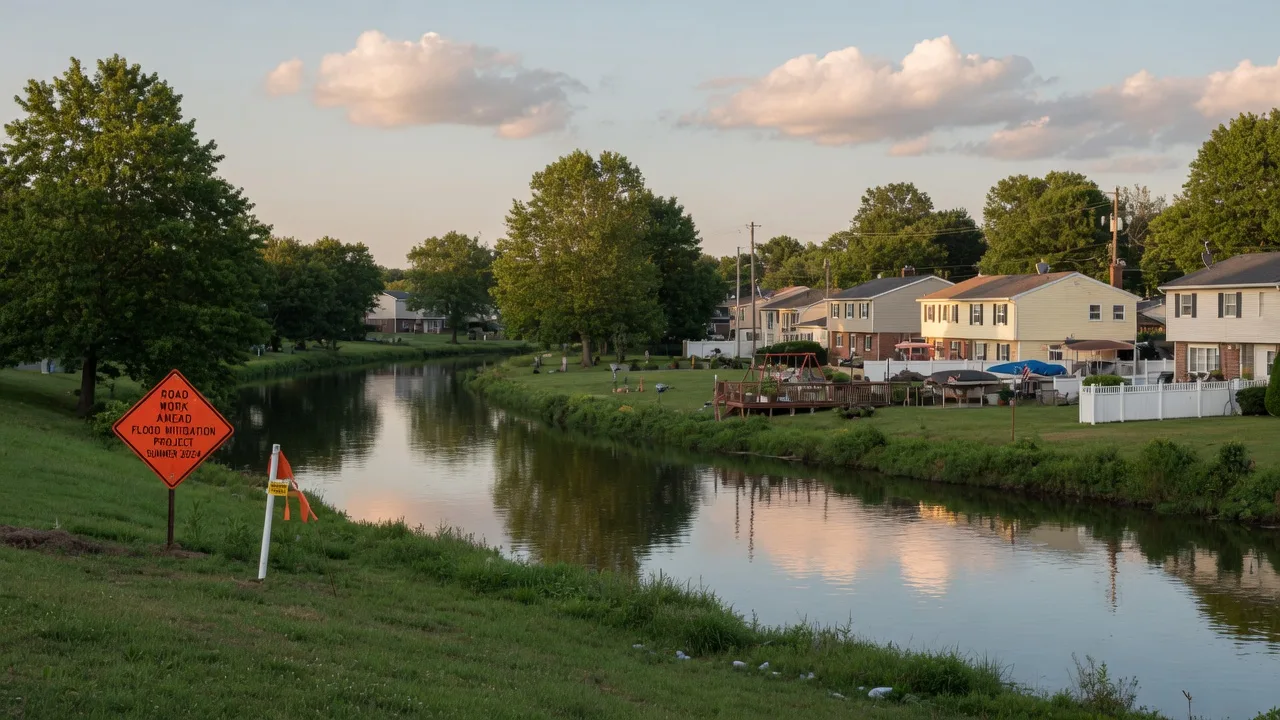
The biggest single project on the table is the Peckman River flood tunnel, serving Little Falls and Woodland Park. Here is what the plan calls for. A 1,500-foot-long, 40-foot-diameter diversion tunnel that runs from the Peckman River to the Passaic River. More than 1,200 linear feet of levees and floodwalls near Passaic Valley High School. Raising up to 16 structures above flood level. And flood-proofing 58 additional structures. The federal funding was secured back in 2022, and as of January 2026, the four towns working together are meeting with the U.S. Army Corps of Engineers to push the project toward construction.
This project has been talked about for years. But now it is real. The Army Corps is engaged. The funding is allocated. The coalitions are formed. For homeowners in Woodland Park and Little Falls, this is the most significant flood mitigation investment in decades. When this tunnel is built, the neighborhoods along the Peckman River, which have flooded repeatedly, will have a level of protection they have never had. That changes the risk calculation for buyers, for insurers, and for lenders. And that change flows directly into property values.
WRDA of 2026: What It Does for North Jersey
The Water Resources Development Act of 2026 was signed into law in July. It is a bipartisan bill that authorizes Army Corps flood protection projects across the country, and North Jersey got several critical provisions. Senator Cory Booker and Congresswoman Nellie Pou secured language that expedites consideration of flood projects in the Passaic River Basin, the Passaic River itself, Berry's Creek, Fleischer Brook, and Wolf Creek. These are the waterways that affect communities from Clifton and Paterson all the way through Bergen County.
The Third River in Clifton got specific attention in the bill, with provisions to speed up flood control improvements on that Passaic River tributary. The Great Falls raceways in Paterson were also included, with language urging the Army Corps to expedite work on those historic water channels. And Berry's Creek in Bergen County, which affects areas like Hackensack and Little Ferry, was included in the expedited consideration list. This bill does not write a check for every project. But it clears the bureaucratic path for projects to move forward faster. For homeowners in flood-prone areas, that is meaningful. Every year of delay is another year of risk. Every year of progress is another year of protection.
The Four-Town Coalition: Little Falls, Woodland Park, and Partners
One of the most encouraging developments I have seen is the formation of a four-municipality Flood Control Advisory Board involving Little Falls, Woodland Park, and other Passaic Valley partners. In January 2026, these towns formally united to address chronic flooding along the Passaic River. They are meeting with the Army Corps. They are coordinating on grant applications. They are sharing data on flood events and infrastructure needs. This kind of regional cooperation is rare in North Jersey. Towns usually operate independently. But flooding does not respect municipal borders. The Peckman River flows through multiple communities. The Passaic River touches half a dozen towns. A coordinated approach is the only approach that actually works, and these towns are doing it.
The Flood Control Advisory Board is also working on smaller-scale projects that can move faster than the big tunnel. Things like stream clearing, storm drain upgrades, and emergency response coordination. These are the practical day-to-day improvements that reduce flood risk while the larger projects go through the federal pipeline.
What This Means for Homeowners in Clifton, Paterson, and the Passaic River Corridor
If you own a home in Clifton near the Third River, or in Paterson near the Passaic River or the Great Falls raceways, or in Woodland Park or Little Falls near the Peckman River, here is what I want you to understand. Flood risk is not a permanent condition. It can be mitigated. And when it is mitigated, properties that were previously considered risky become significantly more valuable.
I have seen this play out in other parts of the country where flood mitigation projects were completed. In communities that invested in flood walls, diversion tunnels, and improved drainage, property values in previously flood-prone areas rebounded by 15 to 25 percent over the five years following project completion. Insurance premiums dropped. Buyer confidence returned. Lenders became more willing to write mortgages without requiring additional flood insurance. The same thing is going to happen in North Jersey as these projects come online.
But here is the other side of that coin. While these projects are under construction, properties in flood-prone areas still carry risk. If you are buying a home today in a flood zone near the Passaic River, you need to factor in flood insurance costs, the history of flooding on that specific block, and the timeline for mitigation projects. Not every flood-prone property is a bad investment. But you need to go in with your eyes open. I always tell buyers: do not just ask whether the house is in a FEMA flood zone. Ask whether the street has flooded in the last five years. Ask whether the neighbors have sandbags in their garages. Ask whether the town has applied for any mitigation grants. The official maps are often outdated. The lived experience of the people who already live there is the real data.
Transit Upgrades Alongside the Flood Work
Flood mitigation is not the only infrastructure story in North Jersey right now. Transit improvements are also moving forward in ways that directly affect home values. NJ Transit took over 10 former Coach USA bus routes serving Passaic County in the wake of Coach USA's bankruptcy, including routes 85, 127, 128, 129, 163, 165, 250, 258, 320, and multiple local routes. The takeovers mean continued service for commuters who rely on those routes to get to work, to school, and to medical appointments. When bus routes are stable, buyers who depend on public transit feel confident about the neighborhood.
The Hudson-Bergen Light Rail extension project took a significant step forward in November 2025 when NJ Transit issued a Request for Proposals to hire a contractor to prepare a Draft Environmental Impact Statement for a 10-mile extension from North Bergen through Bergen County, adding seven new stations. That extension runs through communities north of the existing line, opening up new transit-oriented development opportunities. And the Passaic-Bergen-Hudson Transit Project is studying the restoration of passenger rail service on the New York, Susquehanna and Western Railway right-of-way between Hawthorne in Passaic County and Hackensack in Bergen County, potentially connecting to the light rail system. For homeowners near those proposed stations, this is the kind of long-term value driver that pays off over a decade or more.
What Sellers and Buyers Should Do Right Now
For sellers in Woodland Park, Little Falls, Paterson, Clifton, or any community along the Passaic River corridor, here is my advice. If your property has ever flooded, be upfront about it. Buyers will find out anyway from disclosure forms, flood insurance quotes, or neighbors. Hiding a flood history destroys trust and kills deals. Instead, tell them what has been done to address it. Have you installed a sump pump? Did you replace the water heater after the last flood? Are you aware of the Peckman River tunnel project? Buyers respond to honesty and action, not silence and hope.
For buyers, do not let flood risk scare you off a neighborhood that otherwise checks every box. Flood insurance in Passaic County is not as expensive as people think. The National Flood Insurance Program average premium in New Jersey is around $800 to $1,200 per year for most properties, though it can be higher in high-risk zones. And with the projects we just talked about moving forward, the risk profile of these neighborhoods is going to improve over time. If you find a home you love in a neighborhood that is getting major flood mitigation investment, that is actually a smart long-term play. You are buying before the improvements are complete, before the values adjust upward, and before the insurance premiums come down.
The Bottom Line
I have watched the Passaic River flood homes in Woodland Park, Little Falls, Paterson, and Clifton for 15 years. I have seen families lose furniture, lose appliances, lose irreplaceable photographs, and in some cases lose the ability to live in their own homes for months at a time. The flood mitigation projects happening right now, the Peckman River tunnel, the WRDA 2026 provisions, the four-town coalition, the transit improvements alongside them, represent the most significant investment in North Jersey flood protection in generations. If you own a home in these communities, your property is becoming more protected and more valuable with every milestone these projects reach. If you are thinking about buying in one of these communities, the smart money pays attention to where the investment is going, not where it has already been.
I know these neighborhoods because I have lived in North Jersey my whole life. I know which streets flood and which ones do not. I know which mitigation projects are real and which are still just talk. If you want to understand how the flood protection and infrastructure projects affect your specific property or the home you are considering, call me. I will give you the honest picture based on real data and real experience.
Is Your Property in a Flood-Prone Area? Let's Talk.
I have been helping homeowners in Passaic and Bergen County navigate flood risk, property values, and mitigation projects for 15 years. Whether you are buying, selling, or just want to understand how these infrastructure projects affect your home, I will give you an honest, no-pressure assessment. Free consultation, real answers.
North Jersey's AI-Certified Realtor with 15+ years of experience. Specializing in probate sales, short sales, and distressed properties in Passaic and Bergen County.