
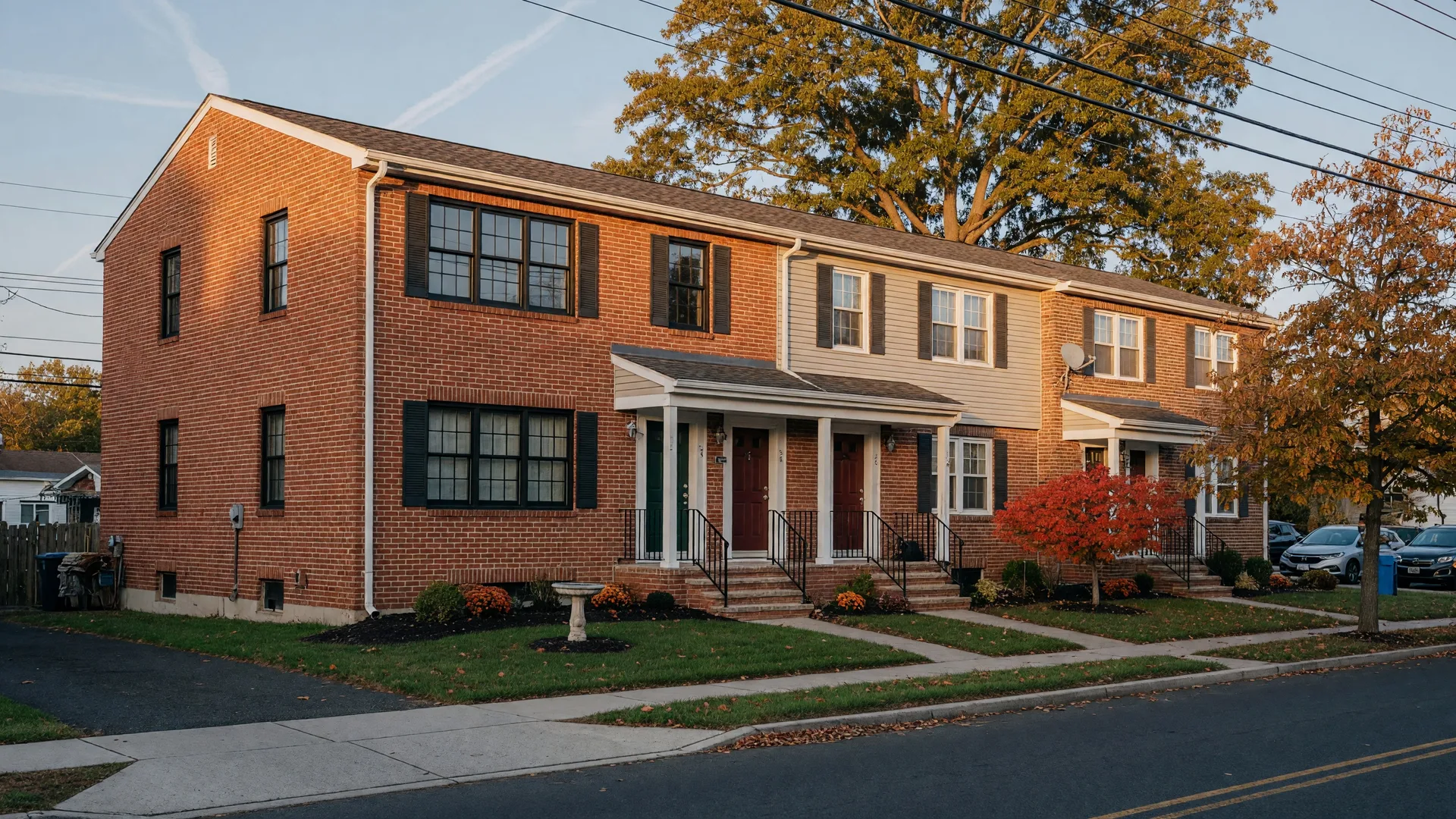
North Jersey Rental Property Management Guide for Investors

I work with investors every week in Passaic and Bergen County who have one thing in common: they bought rental properties because they wanted to build wealth, but the property management side is eating their returns alive. Tenant turnover, surprise maintenance bills, vacancies that drag on for months, rent that has not been raised in three years because they are afraid of losing a decent tenant. I have seen all of it. And here is the truth that nobody on social media will tell you: the difference between a rental property that makes you money and one that costs you money is not the deal you bought. It is how you manage it after you close. Property management is where real estate wealth is won or lost, and most investors either ignore it or get it wrong. Here is how to do it right in North Jersey.
Why Property Management Matters More Than the Deal
Most new investors spend all their energy finding the right property. They run cap rate calculations, compare comparable sales, and negotiate purchase prices. And that matters. But the deal is a one-time event. Property management is the ongoing operation that determines whether the investment actually produces returns over five, ten, or twenty years.
A property purchased at a 6% cap rate in Clifton can easily drop to a 3% effective return if the tenant turnover is high, maintenance is deferred, rent is not adjusted annually, and vacancies are not filled quickly. Conversely, a property purchased at a tighter cap rate in Paterson can outperform expectations if the management is sharp, the tenants are well-screened, and the rent is optimized for the market. Management is the variable that changes everything.
Self-Management vs. Hiring a Property Manager
This is the first decision every rental owner faces, and the answer depends on your situation, your portfolio size, and how close you live to the property. Here is the honest breakdown of both options.
Self-Management
If you own one or two units and you live within fifteen minutes of the property, self-management can make sense. You save the 8% to 12% management fee, which on a property renting for $2,200 per month translates to $176 to $264 per month or roughly $2,100 to $3,200 per year. That is real money, and for a small portfolio it can be the difference between positive and negative cash flow.
But self-management comes with real costs that people underestimate. Your time has value. Every phone call about a leaky faucet, every trip to the property for a lockout, every hour you spend screening tenants, drafting leases, and chasing rent payments is time you are not spending earning income elsewhere. I have watched self-managed properties lose money because the owner avoided raising rent, delayed maintenance, or chose a tenant based on a gut feeling instead of a proper screening process. If you self-manage, treat it like a business. Set systems. Set boundaries. And set rent at market rate.
Hiring a Property Manager
In New Jersey, professional property management companies typically charge 8% to 12% of collected monthly rent as their ongoing management fee. On top of that, most charge a tenant placement fee of 50% to 100% of one month's rent each time a new tenant moves in. Some charge a lease renewal fee of $150 to $300 when an existing tenant renews. And many add a 5% to 15% markup on maintenance and repair coordination.
That sounds expensive until you add up what bad management actually costs. A vacancy that lasts three months instead of three weeks because the property manager listed it correctly, marketed it aggressively, and priced it at market rate saves you $6,600 on a $2,200-per-month unit. A properly screened tenant who stays for three years instead of one saves you the $2,200 placement fee twice and avoids the turnover costs of cleaning, painting, and repairing the unit between tenants. Good property management pays for itself. Bad management is invisible until you look at your annual returns.
Tenant Screening: The Most Important 48 Hours of Your Investment
The single biggest factor in whether a rental property makes money or loses money is tenant quality. A great tenant pays on time, takes care of the property, renews the lease, and makes your life as an owner simple. A bad tenant pays late, damages the property, creates complaints from neighbors, and triggers an eviction that costs $5,000 to $15,000 in legal fees, lost rent, and turnover expenses in New Jersey.
Here is what a proper tenant screening process looks like for a North Jersey rental:
Credit check. Pull a full credit report. You are looking for payment history, outstanding collections, and overall credit management. A credit score below 620 is not an automatic rejection, but it requires a closer look at why the score is low and whether the applicant has shown improvement. A pattern of late payments on utility bills, credit cards, or previous rent is a red flag.
Income verification. Require documentation of income. Two to three months of pay stubs, an employer verification letter, or two years of tax returns for self-employed applicants. The standard requirement is gross monthly income that is three times the monthly rent. On a $2,200-per-month unit in Clifton, that means the applicant needs to document at least $6,600 per month in gross income or $79,200 annually. Do not skip this step. I have seen applicants provide fabricated pay stubs. Call the employer directly to verify.
Eviction and court records. Run an eviction search in addition to the standard background check. New Jersey court records are publicly searchable, and an eviction history tells you more about a tenant's reliability than almost any other data point. If someone has been evicted before, find out why. There is a meaningful difference between an eviction caused by job loss during an emergency and an eviction caused by a pattern of non-payment.
Landlord references. Contact the applicant's current and previous landlords. Ask specifically: Did they pay rent on time? Did they maintain the property? Were there any complaints? Would you rent to them again? Current landlords sometimes give a positive reference simply to get a problem tenant out, so always call the previous landlord as well.
Application fee and deposit. In New Jersey, you can charge an application fee to cover the cost of the background and credit check, but it must be reasonable and you must provide a receipt. Require a security deposit equal to one and one half months' rent, which is the maximum allowed under New Jersey law. Collect the deposit before the tenant moves in and hold it in a separate interest-bearing account as required by NJ law.
Setting Rent: The Number Most Landlords Get Wrong
Setting rent too high is just as costly as setting it too low. An overpriced unit sits vacant, and every month of vacancy costs you the full rent amount plus the ongoing carrying costs of taxes, insurance, and utilities if you are covering them. An underpriced unit fills fast but leaves money on the table every single month for the duration of the lease.
Here is how to price a rental property in North Jersey accurately. Pull comparable rental listings within a one-mile radius of your property. Look at units with similar bedroom count, bathroom count, square footage, and condition. Check what is actually renting, not just what is listed. In Clifton, a clean two-bedroom unit in good condition typically rents between $1,800 and $2,400 per month depending on the neighborhood, parking, and whether laundry is on-site. In Paterson, the range for a similar unit is $1,400 to $2,000. In Passaic, $1,500 to $2,100. In Woodland Park and Totowa, $1,800 to $2,500.
These ranges shift based on specific block-by-block conditions, the age and condition of the building, parking availability, laundry access, outdoor space, and whether utilities are included in the rent. I run rent comp analyses for investors I work with because the difference between pricing at $1,800 and pricing at $2,000 is $2,400 per year in gross income. Over a five-year hold, that is $12,000 in revenue you either captured or left on the table.
Annual Rent Increases: Why You Must Raise Rent Every Year
This is where emotion kills returns. Landlords who like their tenants do not want to raise the rent. I understand that impulse. But here is what happens when you do not raise rent for three years in a row. Your operating costs go up every year. Property taxes increase. Insurance premiums increase. Maintenance costs increase. Utilities, if you are paying them, increase. If your rent stays the same, your net operating income shrinks every single year. Your cash-on-cash return drops. Your investment is literally losing purchasing power.
In North Jersey, annual rent increases of 3% to 5% are standard and expected. Most tenants understand that costs go up. The ones who do not accept a reasonable annual increase are usually the ones who were already planning to leave, and holding rent below market to keep them rarely works long-term anyway. A $2,000-per-month unit that does not get raised for three years should be renting for approximately $2,185 by year three at a 3% annual increase. That is $185 per month or $2,220 per year you are not collecting. Over the life of a rental property, consistent annual increases are one of the most powerful wealth-building tools you have.
Vacancy Reduction: The Real Cash Flow Killer
Vacancy is the silent profit killer for rental investors. Every day a unit sits empty, you are paying for the property with no income coming in. In North Jersey, where rental demand is strong, a well-priced unit in good condition should not sit vacant for more than 30 days. If your unit is sitting for 60 or 90 days, there is a problem with either the price, the condition, the marketing, or the screening process.
Here is how to minimize vacancy. When you know a tenant is leaving, start marketing the unit immediately. Do not wait until they are out. List the unit 45 to 60 days before the current lease expires. Schedule showings during the final month. Have the unit cleaned, repaired, and painted during the turnover window so it is ready to show while the previous tenant is still in place, or immediately after they move out. Use professional-quality photos in your listing. In a market where most landlords use their phone camera in poor lighting, good photos put you ahead of 80% of the competition instantly.
When you do have a vacancy, calculate the true cost. A $2,000-per-month unit that sits vacant for 45 days costs you $3,000 in lost rent. Add the carrying costs during that period, including the portion of mortgage, taxes, insurance, and utilities that you are paying with no income offset. The total cost of a single 45-day vacancy on a $2,000 unit is typically $4,500 to $5,500. That is why proactive marketing, proper pricing, and good tenant retention matter more than almost anything else you do as a landlord.
Maintenance: Stay Ahead of It or Pay for It Later
Deferred maintenance is the most expensive mistake a landlord can make. A $200 plumbing repair that gets ignored becomes a $2,000 water damage claim. A $500 roof patch that gets postponed becomes a $15,000 roof replacement during a tenant's lease. A $300 annual HVAC service call that gets skipped becomes a $6,000 emergency replacement in January when the system fails at 2 AM.
The smart approach is to set aside reserves. The industry standard recommendation is to budget 5% to 15% of gross annual rental income for routine maintenance and a separate 5% to 10% for capital expenditure reserves. On a property generating $26,400 in annual rent, that means putting away $1,320 to $3,960 per year for maintenance and $1,320 to $2,640 for capital items. A property worth $450,000 should also have $4,500 to $9,000 per year set aside using the 1% to 2% of property value rule.
In Passaic County, where many rental properties are older two- and three-family homes built between the 1920s and 1970s, the capital expenditure timeline matters. Roofs last 20 to 30 years. Boilers last 15 to 25 years. Hot water heaters last 8 to 12 years. Windows, siding, porches, and driveways all have finite lifespans. Know the age of every major system in your building and plan for replacements before they fail. An investor who budgets for a $12,000 roof replacement five years in advance absorbs it easily. An investor who gets surprised by the same $12,000 bill has to pull from cash reserves, take on debt, or sell the property at a bad time.
New Jersey Landlord-Tenant Law: What You Must Know
New Jersey has some of the most tenant-protective landlord-tenant laws in the country. If you own rental property in Passaic or Bergen County, you need to understand the basics, or you will make expensive mistakes.
Security deposit limits. For properties with two or fewer units, you can collect up to one and one half months' rent. For properties with more than two units, the limit is also one and one half months' rent. The deposit must be held in an interest-bearing account in a New Jersey bank, and you must provide the tenant with written notice of where the deposit is held within 30 days. You must return the deposit with accrued interest within 30 days of the tenant moving out, minus any legitimate deductions.
Rent increases. New Jersey does not have rent control statewide, but some municipalities do. Paterson does not currently have rent control, but the regulatory landscape can change. Check local ordinances before implementing increases. In most Passaic and Bergen County towns, you can raise rent by any amount with proper notice. For month-to-month tenancies, 30 days' notice is required. For lease terms, the increase takes effect at lease renewal.
Eviction process. New Jersey requires landlords to go through the court system to evict a tenant. You cannot change the locks, shut off utilities, or remove the tenant's belongings. The process starts with a Notice to Quit, followed by filing a complaint in Special Civil Part court. Even after obtaining a judgment for possession, the actual eviction is carried out by a court officer. The entire process from notice to physical removal can take 60 to 120 days or longer. This is why tenant screening is so critical. Prevention is always cheaper and faster than eviction.
Habitability obligations. Under New Jersey law, landlords must maintain the property in habitable condition. That means working plumbing, heat, hot water, electricity, structural integrity, and compliance with local building and health codes. If a tenant reports a maintenance issue that affects habitability, you are legally required to address it in a reasonable timeframe. Ignoring habitability complaints can result in the tenant withholding rent, calling local code enforcement, or filing a claim in court.
Section 8 and Housing Voucher Tenants: What Landlords Need to Know
If you are not considering Section 8 tenants, you are leaving money on the table in North Jersey. The Housing Choice Voucher program pays a portion of rent directly to the landlord from HUD each month. The tenant pays the remainder based on their income, typically 30% of adjusted gross income. In Passaic and Bergen County, Section 8 payment standards are updated annually and often align with or exceed market rents for comparable units. A two-bedroom in Clifton under the payment standard can receive $1,800 to $2,100 per month in direct government payments.
The advantages are straightforward. Reliable monthly payments from the government. Lower vacancy rates because Section 8 tenants are actively searching and have voucher expiration deadlines. And a tenant population that is invested in maintaining their housing because losing the voucher has significant consequences.
The trade-offs are real too. The property must pass a Housing Quality Standards inspection before the tenant can move in, and those inspections can be detailed. You cannot deny a tenant solely based on their source of income in New Jersey. And the administrative process of working with the local Public Housing Authority adds a layer of complexity that some landlords prefer to avoid. But for investors who understand the system, Section 8 is one of the most reliable income streams in North Jersey rental real estate.
Building Systems: What Separates Amateur Landlords from Professional Investors
Amateur landlords react to problems. Professional investors build systems that prevent problems or minimize their impact. Here are the systems every rental investor should have in place.
Rent collection. Use online rent collection. Platforms like AppFolio, Buildium, RentRedi, or even Zelle or direct bank transfer eliminate the excuses for late payment and create a documented payment history. If a tenant pays by check and the check bounces, you are chasing money. Online payments create automatic records and make it easier to enforce late fees consistently.
Maintenance request system. Give tenants a simple way to report maintenance issues. A dedicated email, a tenant portal, or a shared spreadsheet. When tenants report issues through a system instead of a text message, you create documentation, track response times, and prevent the small problems from becoming big ones.
Financial tracking. Track every dollar in and every dollar out. Income, expenses, reserves, capital improvements. Use software or a detailed spreadsheet. At tax time, you need this information to take every deduction you are entitled to. At refinancing time, you need it to show lenders your property's actual performance. And at sale time, documented financial history increases buyer confidence and property value.
Lease agreements. Use a New Jersey-compliant lease. Not a template you downloaded from Google. New Jersey has specific requirements for what must be included in a lease, and missing required disclosures or using unenforceable clauses creates legal exposure. Have a New Jersey real estate attorney review your lease template once, and then use that template for every tenant. It is a one-time investment that protects you for the life of the property.
The Numbers That Actually Matter
If you own a rental property in North Jersey and you cannot instantly tell me these five numbers, you are not managing your investment properly.
Net Operating Income (NOI). This is your total rental income minus all operating expenses, excluding mortgage payments. It tells you what the property actually generates before debt service. If your NOI is negative or flat, the property is not performing, regardless of what the gross rent looks like.
Cash-on-Cash Return. This is your annual pre-tax cash flow divided by the total cash you invested in the property. A property where you invested $100,000 and it produces $8,000 per year in positive cash flow has an 8% cash-on-cash return. That is the real return on your actual investment, and it is the number you should compare against other investment options.
Occupancy Rate. How many days per year is the unit occupied and generating income? A unit that is occupied 345 out of 365 days has a 94.5% occupancy rate. In North Jersey, anything below 90% needs immediate attention. Anything above 95% indicates strong management.
Operating Expense Ratio. This is your total operating expenses divided by your gross rental income. In North Jersey, where property taxes are among the highest in the country, this ratio tends to run higher than national averages. A ratio between 35% and 50% is typical for a well-managed Passaic County multi-family. If your ratio is above 50%, you need to examine which expenses are eating into returns and whether they can be reduced.
Average Days Vacant. Track how long it takes to fill each vacancy over the life of the property. If your average days vacant is creeping up, something is changing in your market or your property's competitiveness. Address it before it becomes a trend.
The Bottom Line
Rental property ownership in North Jersey is one of the most effective wealth-building strategies available to ordinary investors. Passaic and Bergen County offer strong rental demand, diverse tenant populations, and property values that appreciate alongside income. But the returns do not happen automatically. They happen because the property is managed well: tenants are screened properly, rent is set at market rate, increases happen annually, maintenance stays ahead of problems, vacancies are filled fast, and the numbers are tracked religiously.
Whether you self-manage or hire a professional, the investors who win in this market are the ones who treat their rental properties like a business. I work with investors across Paterson, Clifton, Passaic, Woodland Park, Totowa, Haledon, and Garfield who are building portfolios from one unit to five, ten, and beyond. If you want to talk about your rental property, your management approach, or whether your numbers are where they should be, reach out. I will give you an honest assessment of where you stand and what you can do to improve your returns. No pressure. Just straight answers from someone who does this every day.
Want to Optimize Your Rental Portfolio?
I work with rental property investors across Passaic and Bergen County to analyze their portfolios, optimize rent pricing, and identify opportunities to increase cash flow. Schedule a free investment consultation and let me review your numbers.
North Jersey's AI-Certified Realtor with 15+ years of experience. Specializing in probate sales, short sales, and distressed properties in Passaic and Bergen County.