
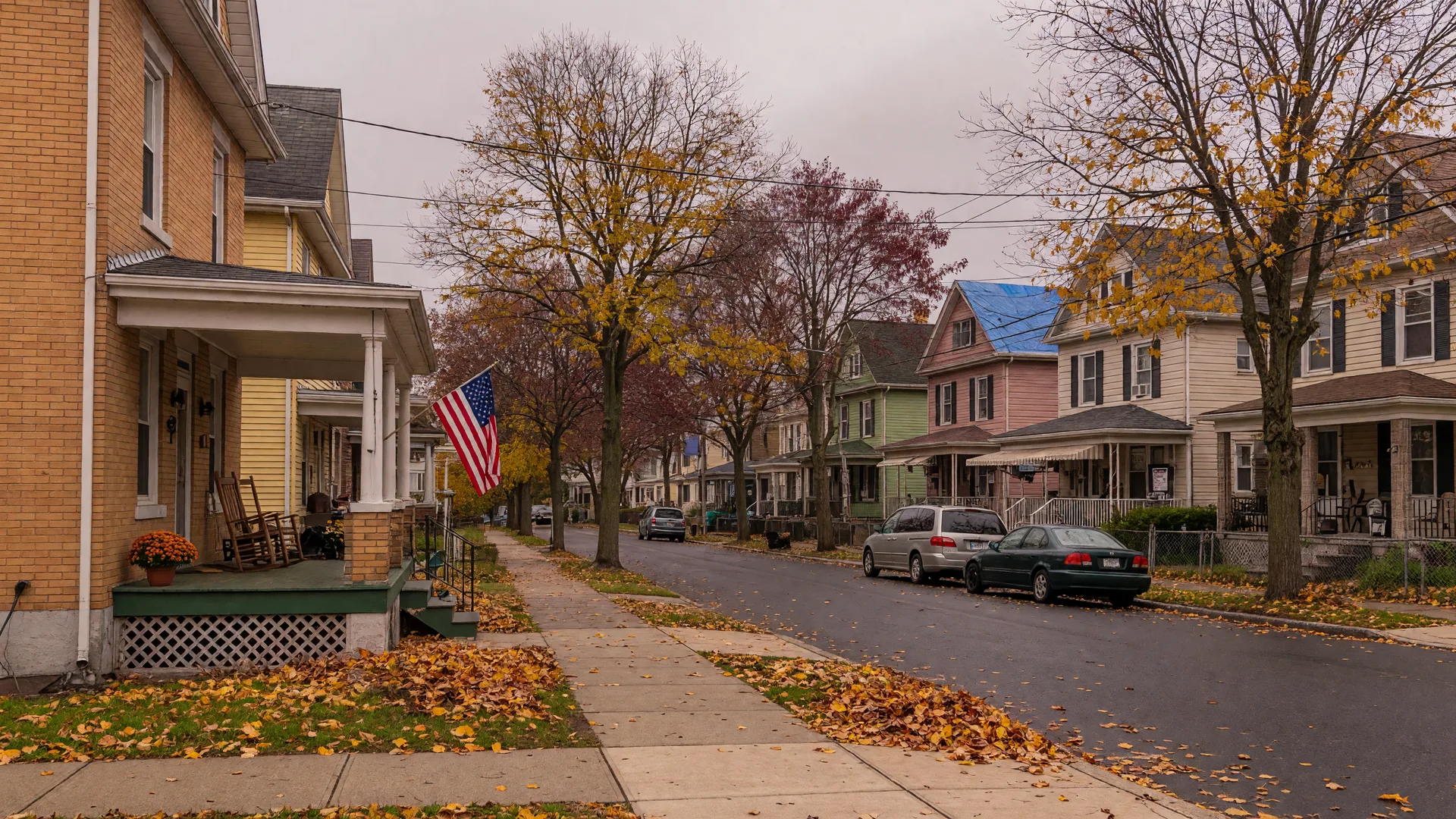
Probate, Multi-Owner Disputes & Tax Waivers | North Jersey Heirs Guide

I have been helping families sell inherited homes in North Jersey for 15 years. And in all that time, the hardest part of my job has never been the market or the price. It has been helping families navigate the probate process when they are already dealing with grief, stress, and the weight of a loved one's estate. If you have inherited a home in Passaic County or Bergen County, you are probably asking the same questions every family asks. How long does this take? Do I have to pay taxes on the house? What happens if my siblings and I do not agree? Do I need to fix the place up before selling? I am going to answer all of these questions with the same directness I use when I sit down with a family in their kitchen. No sugarcoating, no legalese. Just what you need to know to move forward.
The NJ Probate Timeline: What Actually Happens and When
The probate process in New Jersey follows a legal timeline that every executor needs to understand. Here is how it breaks down for a typical estate with a house involved.
Step One: Opening Probate (Days 10 to 30)
New Jersey law requires that the will be presented to the county Surrogate's Court within 10 days of the date of death. The Surrogate's Court is located in the county where the deceased person lived. For Passaic County, that is in Paterson. For Bergen County, that is in Hackensack. You will need the original will and a certified death certificate. If the will is self-proving, meaning it includes a notarized affidavit from the testator and witnesses, the Surrogate can validate it on the spot without tracking down witnesses. If it is not self-proving, at least one witness needs to appear or submit a sworn deposition. Once the Surrogate reviews and approves the will, the executor is formally appointed and receives Letters Testamentary. This appointment can often happen in under an hour at the Surrogate's Court counter. But you cannot apply until at least 10 days after the date of death. That waiting period is a legal requirement, so plan around it.
Step Two: Inventory and Appraisal (30 to 90 Days)
Once the executor has legal authority, they need to identify and value all estate assets, including the real estate. An appraisal of the home is needed for two reasons. First, the estate needs to know what the property is worth for tax and distribution purposes. Second, if the property is going to be sold, the listing price should be based on current market value, not a guess. The executor should order a professional appraisal or work with a real estate agent who can provide a comparative market analysis. In Passaic County, I see appraisal turnaround times of 1 to 3 weeks for a standard residential property.
Step Three: Creditor Claims Period (9 Months)
New Jersey law gives creditors 9 months from the date of death to file claims against the estate. The executor is responsible for notifying known creditors and publishing a notice to unknown creditors in the local newspaper. If a creditor files a valid claim, the estate must pay it from estate assets before distributing anything to heirs. In practice, this means the executor needs to keep the estate open for at least 9 months unless all creditors have been paid or waived their claims. For a probate real estate sale, the proceeds from the house sale are typically held in the estate account until the creditor period closes or until the executor gets court approval to distribute early.
Step Four: Selling the Property (Can Start Immediately)
Here is the good news. The executor does not need to wait for the creditor period to expire before selling the house. Once the executor has Letters Testamentary, they have the legal authority to list and sell the property. You can start marketing the home, accepting offers, and going under contract while the rest of the estate work continues in the background. The only requirement is that the sale must be at fair market value, and the proceeds must go into the estate account for proper distribution. In most Passaic County probate sales, the property goes under contract within 30 to 60 days of listing, and closing happens 30 to 45 days after that. The entire timeline from listing to closing is typically 60 to 90 days, depending on whether court approval is needed.
Step Five: Court Approval (If Required)
In some situations, the executor needs court approval before selling the property. This is more common when there is no will (intestate estate), when the executor does not have the authority to sell without court supervision, or when the will itself requires court approval for real estate transactions. If court approval is needed, the executor must file a motion with the Surrogate's Court or the Chancery Division, provide notice to all interested parties, and attend a hearing. This process typically adds 30 to 60 days to the timeline. In straightforward cases with a will and a cooperative executor, court approval is often not necessary, but it depends on the specific facts of the estate and the county where probate is filed.
What Taxes Apply to Inherited Property in New Jersey
This is the area where I see the most confusion among families. Let me clear it up.
New Jersey Inheritance Tax
New Jersey still has an inheritance tax, and it is based on the beneficiary's relationship to the deceased, not on the value of the overall estate. If you are a surviving spouse, child, grandchild, parent, or grandparent, you are a Class A beneficiary and you pay nothing. Zero. This covers the vast majority of inherited homes in North Jersey. If you inherit as a sibling, son-in-law, or daughter-in-law, you are Class C. The first $25,000 is exempt, and anything over that is taxed at rates from 11% to 16%. If you inherit as a niece, nephew, cousin, friend, or unrelated party, you are Class D. There is no exemption, and the tax starts at 15% on the first dollar. That is a significant tax bill that needs to be factored into the estate plan. The inheritance tax return, Form IT-R, is due within 8 months of the date of death. The estate attorney typically handles this filing. If you fail to file or pay on time, interest accrues from the due date.
New Jersey Estate Tax
Good news here. New Jersey repealed its estate tax effective January 1, 2018. For anyone who passed away in 2026, there is no New Jersey state estate tax. The federal estate tax still applies, but the 2026 exemption is roughly $15 million per individual, which means almost every estate in North Jersey will owe nothing at the federal level either.
Capital Gains When You Sell
When you sell an inherited property, capital gains tax is calculated on the difference between the sale price and the property's "stepped-up basis." The stepped-up basis is the fair market value of the home on the date of the deceased person's death, not what they originally paid for it. This is a major tax advantage. If a parent bought a house for $150,000 in 1980 but it was worth $550,000 when they passed away, your basis is $550,000. If you sell for $575,000, you only pay capital gains on the $25,000 gain, not on the $425,000 in appreciation. If you sell the home within one year of the date of death, any gain is short-term capital gains taxed at your ordinary income rate. If you sell after one year, it is long-term capital gains taxed at the lower rate, typically 15% or 20% depending on your income.
The New Jersey Tax Waiver (Form L-8)
Before the executor can transfer or sell real estate from an estate, they need to obtain a tax waiver from the New Jersey Division of Taxation. This is called Form L-8 for real property. It confirms that the inheritance tax has been paid or that no tax is due. Without this waiver, the title company cannot clear the title, and the sale cannot close. The estate attorney typically handles the L-8 application, but the executor needs to start this process early because the Division of Taxation can take 4 to 8 weeks to issue the waiver. I have seen closings delayed by months because someone forgot to apply for the L-8 in time. Do not let that be you.
Working With the Executor: Your Role and Your Responsibilities
If you have been named the executor of an estate, you have legal and fiduciary responsibilities. You are required to act in the best interest of the estate and its beneficiaries at all times. Here is what that means in practice when real estate is involved. You must preserve the property. That means keeping the utilities on, maintaining insurance coverage, securing the property against vandalism or weather damage, and preventing deterioration. You must not sell the property to yourself, a family member, or a friend at a discount without court approval and notice to all beneficiaries. That is called self-dealing, and it is illegal. You must keep all proceeds from the sale in a separate estate account, not in your personal account. And you must provide a full accounting to the beneficiaries and to the Surrogate's Court when the estate is settled.
If you are a beneficiary but not the executor, your role is different. You have the right to be informed about the status of the estate, the sale of the property, and the distribution of proceeds. You also have the right to challenge the executor's actions if you believe they are not acting in the estate's best interest. But open communication is usually more productive than conflict. In my experience, the estates that go smoothly are the ones where the executor communicates regularly with the beneficiaries, explains decisions, and keeps everyone in the loop.
Clearing Out the Property: What to Keep, What to Throw, What to Donate
One of the most physically and emotionally draining parts of selling an inherited home is clearing out the contents. A lifetime of possessions needs to be sorted, and there is no easy way to do it. But there is a practical way. Start with the personal documents. Look for the will, insurance policies, bank statements, tax returns, property deeds, and any estate planning documents. These go to the executor and the estate attorney. Next, identify valuable items. Jewelry, antiques, collectibles, artwork, coin collections, and other valuables should be appraised and either distributed according to the will or sold and added to the estate account. Do not let a single family member clean out the house and take whatever they want without documenting everything. I have seen sibling relationships destroyed by arguments over furniture and dishes.
For everything else, there are options. Donate usable items to Goodwill, the Salvation Army, or a local charity in Passaic County. You can request a donation receipt, and the estate can claim a charitable deduction on the final tax return. For items that are not worth donating, hire a junk removal company. There are several in North Jersey that handle estate cleanouts, and they will haul everything away for a flat fee. Expect to pay $500 to $2,000 depending on the size of the home and the amount of belongings. That cost is an estate expense and is deducted from the sale proceeds before distribution. If the home is full and you do not have the time or emotional energy to sort through everything, you can also sell the property as-is with the contents included. Some cash buyers specifically look for homes with contents because they buy in bulk and dispose of everything themselves. It is a faster option, though you will typically get a lower price for the property.
When Multiple Heirs Co-Own the Property: How to Avoid Getting Stuck
This is the situation that causes the most stress in my line of work. When two, three, or four siblings inherit a property together, they all have equal rights to the asset. If everyone agrees on what to do, great. If they do not, the estate can get stuck for months or years while the siblings argue. Here is what I tell families who find themselves in this situation.
First, understand that the executor makes the decisions about the property, not the individual heirs. If the executor has been appointed and has Letters Testamentary, they have the legal authority to list and sell the property, even if some heirs disagree. The executor must act in the best interest of the estate, not necessarily in the interest of each individual heir. Second, if there is no executor or if the heirs are co-owners of the property outside of probate, the situation is different. Every co-owner has an equal right to occupy and use the property. If one heir wants to sell and the others do not, the only remedy is a partition action in court, where a judge orders the property sold and the proceeds divided. That process takes months and costs thousands of dollars in legal fees. It is the nuclear option, and I only recommend it as a last resort.
The better approach is to sit down together with a neutral third party and work out an agreement. I do this regularly with families in Clifton, Paterson, and Passaic. We talk about the numbers. Here is what the home is worth. Here is what it would sell for. Here is what each sibling would receive after costs and taxes. Once people see the actual numbers on paper, disagreements about "fairness" often become disagreements about numbers, which are easier to resolve. If one sibling wants to keep the property, they need to buy out the others at fair market value, not at a discount. If everyone agrees to sell, we agree on a timeline, a price range, and communication expectations. Having a professional who is not emotionally involved makes a huge difference in these conversations. I serve as that neutral point of contact. I do not take sides. I help the family reach a decision that works for everyone and gets the property sold.
Common Probate Challenges and How to Solve Them
Over 15 years, I have seen every probate challenge you can imagine in North Jersey. Here are the most common ones and how to handle them.
Title Issues and Liens
A title search often reveals liens against the property that nobody knew about. Unpaid property taxes, contractor liens, Medicaid liens, HOA assessments, and even old judgments against the deceased. The executor needs to work with the estate attorney to resolve these before the property can be sold. Some liens can be paid from the sale proceeds at closing. Others need to be negotiated or disputed. In Passaic County, unpaid property taxes are the most common issue I see. The good news is that tax liens are typically paid at closing from the proceeds, so they do not have to be resolved upfront.
Estate Attorney Delays
Not all estate attorneys are created equal. Some are responsive and proactive. Others are overwhelmed and slow. If your estate attorney is not returning calls or moving the file forward, do not be afraid to find a new one. The estate will survive a change in counsel. A good estate attorney who specializes in probate in Passaic or Bergen County is worth every dollar of their fee because they know the local Surrogate's Court, they know the local title companies, and they know the common issues that come up.
Property Condition Concerns
Most inherited properties need work. The question is whether the repairs are worth doing before selling. In many cases, selling as-is is the right answer. The buyer pool for as-is properties in North Jersey is deep, especially in Passaic County where investors and flippers are active. I have sold inherited homes in Woodland Park, Totowa, Haledon, and Garfield that needed significant work, and every one of them sold at fair market value to an investor or a buyer who planned to renovate. If your inherited property needs a new roof, updated electrical, or major cosmetic work, do not assume you need to pay for those repairs before selling. Let me run the numbers and tell you whether the investment would pay off at the closing table.
The Bottom Line
Selling an inherited home in New Jersey is a process with real legal requirements, real timelines, and real costs. But it does not have to be overwhelming. The key is working with people who know what they are doing. An experienced estate attorney who practices in your county. A title company that understands probate sales. And a real estate agent who is a Certified Probate Specialist and has handled dozens of these transactions in North Jersey. I bring that experience to every estate sale I handle. I know the Surrogate's Court in Paterson. I know the title issues that come up in Clifton and Passaic. I have relationships with estate attorneys across both counties, and I know how to keep a probate sale moving even when unexpected obstacles come up.
If you have inherited a home in Passaic County or Bergen County, or if you are the executor of an estate that includes real estate, reach out. I will sit down with you, review the situation, outline the timeline and the options, and help you make a plan. Free, no obligation, and no pressure. Just the guidance you need when you need it most.
Facing a Probate Sale? I Can Help.
I am a Certified Probate Specialist with 15 years of experience helping families sell inherited homes in Clifton, Paterson, Passaic, Woodland Park, Totowa, Haledon, Garfield, and across North Jersey. I handle every detail so you can focus on your family. Free consultation, no pressure.
North Jersey's AI-Certified Realtor with 15+ years of experience. Specializing in probate sales, short sales, and distressed properties in Passaic and Bergen County.