
How to Buy a Two-Family in North Jersey and Live Rent-Free: The Complete House Hacker's Guide for Passaic and Bergen County Investors

I have worked with dozens of first-time investors in Passaic and Bergen County who wanted to build wealth through real estate but did not know how to get started. They had steady jobs, decent credit, and a few thousand dollars saved. What they did not have was the six-figure down payment they assumed they needed. So they kept renting. They kept paying their landlord's mortgage while dreaming about buying their own place. Every single one of them could have bought a two-family or three-family property for 3.5% down using an FHA loan, lived in one unit for a year, and let their tenants pay the mortgage while they built equity. That is house hacking. It is the single most accessible path to real estate wealth in North Jersey. And almost nobody does it because they do not know it exists. Here is exactly how house hacking works in Paterson, Clifton, Passaic, Totowa, Woodland Park, Haledon, and Garfield, with real numbers, property management tips, and a step-by-step plan to get your first deal done.
What Is House Hacking and Why Does It Work in North Jersey?
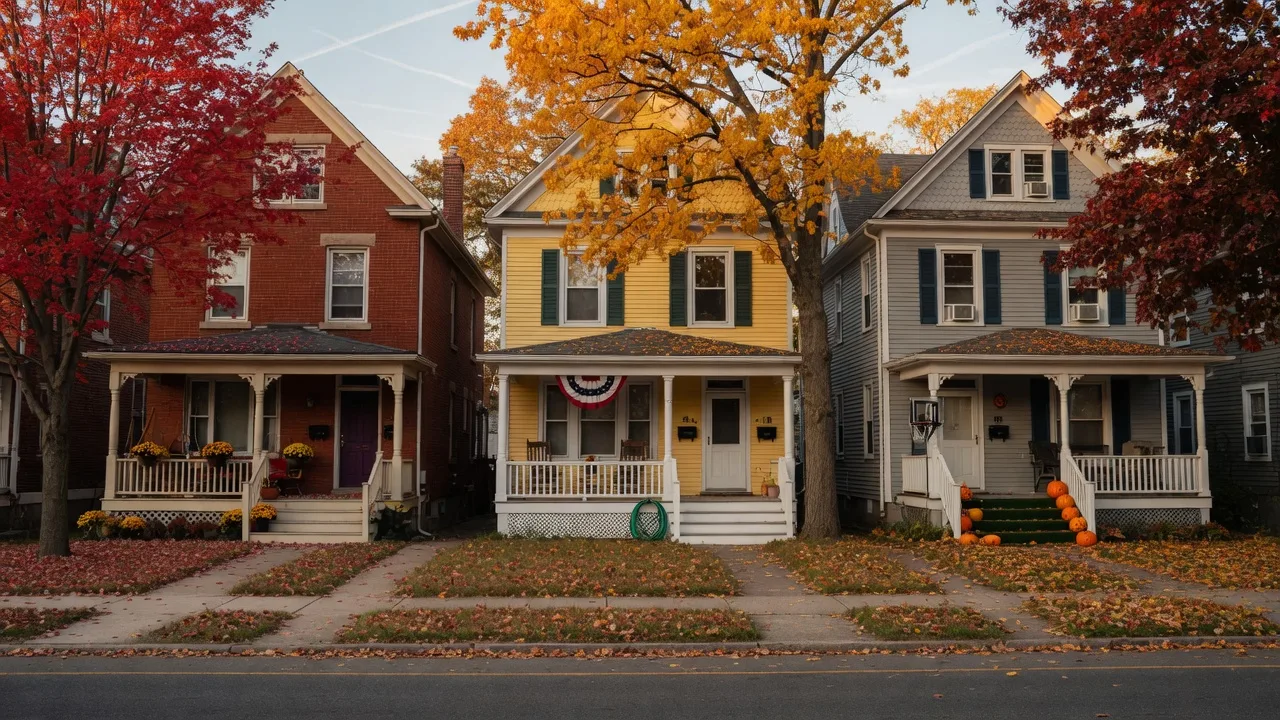
House hacking is simple. You buy a multi-family property, a two-family, three-family, or four-family. You live in one unit. You rent out the others. The rental income from your tenants covers your mortgage payment, property taxes, and insurance. Your housing cost drops to zero or close to it. You build equity through appreciation and principal paydown while someone else pays your bills. After one year, you can move out, rent your unit, and repeat the process on the next property.
North Jersey is one of the best markets in the country for house hacking. Here is why. Multi-family properties are abundant in Passaic County. Towns like Paterson, Clifton, and Passaic have a high concentration of two-family and three-family homes built in the early to mid-20th century. Rental demand is strong because of the proximity to New York City, with steady demand from commuters, families, and essential workers. Property taxes are high, but when you spread the tax burden across multiple rental units, the per-unit cost drops dramatically. And the FHA loan program allows you to buy a multi-family property with as little as 3.5% down, which is the lowest down payment requirement for an investment property in the country.
Let me give you a real example. I helped a teacher from Paterson buy a two-family in the Eastside neighborhood for $425,000 in May 2026. She put 3.5% down, which was $14,875. The first-floor unit has three bedrooms and rents for $2,100. The second-floor unit has two bedrooms and rents for $1,700. She lives in the first floor and rents out the second. Her total monthly housing payment including principal, interest, taxes, and insurance is roughly $3,450. The tenant's $1,700 rent covers almost half of that. After one year, she will move out, rent both units for a combined $3,800, and her mortgage will be fully covered with $350 in monthly cash flow before expenses. In year one, she will have built roughly $8,500 in equity through principal paydown alone, plus whatever appreciation the property sees. Her total out-of-pocket investment was $14,875 plus closing costs of roughly $8,000. That is a first-year return on investment that most stock market strategies cannot touch.
The Financial Mechanics: Cap Rates, Cash Flow, and the 1% Rule
Before you start shopping for multi-family properties in North Jersey, you need to understand the numbers that matter. The cap rate is the property's net operating income divided by its purchase price. In Passaic County, two-family and three-family properties are trading at cap rates of 5.5% to 7.0% depending on the neighborhood, condition, and rental income. Paterson and Passaic tend to land at the higher end of that range. Clifton and Woodland Park run tighter at 5.0% to 6.0% because home values are higher.
The 1% rule is a quick screening tool. It says the monthly rent should be at least 1% of the purchase price. A $425,000 two-family should rent for at least $4,250 per month combined. In Paterson, that is achievable on a well-maintained two-family with one three-bedroom and one two-bedroom unit. In Clifton, you may need to stretch closer to a 0.8% or 0.9% ratio because prices are higher and rents do not scale perfectly. The 1% rule is not a hard number. It is a smell test. Pass it and the deal is worth a deeper look. Fail it and you need a strong compensating factor like forced appreciation potential or an ultra-low interest rate.
Cash flow is what is left after you account for every expense. This is where most first-time investors make their biggest mistake. They look at the gross rent, subtract the mortgage payment, and call it cash flow. That misses vacancy, property management, maintenance, capital expenditures, and insurance. A realistic pro forma for a two-family in Passaic County looks like this. Gross rent of $3,800 per month. Minus 5% vacancy reserve at $190. Minus 8% property management at $304, even if you manage it yourself at first, you should budget for it because you will hire a manager eventually. Minus 10% maintenance and repairs at $380. Minus 5% capital expenditures at $190, which covers the roof replacement, boiler, and appliances that will fail eventually. That leaves you with $2,736 in effective net operating income per month before the mortgage. If your total monthly mortgage payment is $3,450, you are negative $714 before you factor in the unit you live in. But in a house hack, you are living in one unit, so your personal housing cost is that negative $714 minus the market rent you would have paid to live somewhere else. If market rent for an equivalent apartment is $1,800, your net housing cost is actually negative $1,086, meaning you save $1,086 per month compared to renting while building equity. The numbers work differently depending on the property, the financing, and the town. The key is to run them honestly before you buy.
Where to Find Multi-Family Properties for House Hacking in North Jersey
Paterson offers the most affordable entry point for house hacking in Passaic County. Two-family properties in the Eastside, Lakeview, and People's Park neighborhoods range from $350,000 to $475,000. Cap rates run 6.5% to 7.5%. Rental demand is strong from commuters and local workers. The city is undergoing significant redevelopment, which supports long-term appreciation. Paterson also has a high concentration of Section 8 tenants, which creates a steady, government-backed rental income stream for landlords who are willing to work with the program.
Clifton is more expensive but offers stronger appreciation potential and higher-quality tenants. Two-family homes in Clifton typically run $500,000 to $650,000. Cap rates are lower at 5.0% to 6.0%, but the properties tend to be in better condition, which means lower repair costs upfront. Clifton's school system and proximity to Route 3 and the Garden State Parkway make it attractive to families and professionals. If you can afford the higher entry price, Clifton is a lower-risk house hack.
Passaic offers a middle ground. Two-family properties range from $400,000 to $525,000. Cap rates run 5.5% to 6.5%. The city has strong rental demand from the Hispanic community and proximity to the Passaic River redevelopment areas. Totowa and Woodland Park are smaller markets with fewer multi-family properties, but the ones that hit the market tend to be well-maintained and attract quality tenants. Expect to pay $500,000 to $600,000 for a two-family in those towns. Haledon and Garfield offer entry points in the $380,000 to $480,000 range with comparable cap rates to Passaic.
The best way to find multi-family properties for house hacking is to search the MLS daily as soon as you are pre-approved with an FHA lender. Off-market deals in this price range are rare for first-time buyers because sellers prefer to market properties broadly. The MLS is your friend for your first house hack. Work with an agent who knows multi-family properties and can identify the deals that pencil out before they hit Zillow.
FHA Financing: The House Hacker's Best Friend
The FHA 203(b) loan program is designed for owner-occupants buying one- to four-unit properties. It requires only 3.5% down. The interest rates are competitive with conventional loans. And you can roll the upfront mortgage insurance premium into the loan amount, which reduces your cash needed at closing. For a first-time home buyer in North Jersey, the FHA loan is the most powerful tool available for multi-family investing.
Here is exactly what you need to qualify. A credit score of at least 580, though 620 or higher gets you better terms. Two years of steady employment history with verifiable income. The property must be your primary residence for at least 12 months after closing. The property must meet FHA minimum property standards, which means no major structural defects, no lead paint hazards in units built before 1978 that are not properly addressed, and no health or safety issues. The seller can contribute up to 6% of the purchase price toward your closing costs, which reduces your out-of-pocket expenses further.
The FHA 203(k) program takes it a step further. It allows you to finance the purchase price plus the cost of renovations into a single mortgage. This is perfect for value-add properties in Paterson and Passaic where the purchase price is low but the units need cosmetic or mechanical updates. You buy the property, renovate the non-owner units, and the increased rent from those units covers your mortgage payment while you live in the other unit. After a year, you can move out, rent your unit, and repeat the process on the next property. I have seen several of my investor clients build portfolios of three and four properties in under five years using this exact strategy, starting with nothing but an FHA loan and a willingness to live in the property for the first year.
Property Management Tips for House Hackers
Living next to your tenants changes the property management dynamic. It is both easier and harder than managing a property from a distance. It is easier because you are on site. You notice when a pipe is leaking, when the heat is not working, or when a tenant is causing problems. You do not need a property manager because you are there every day. It is harder because you are sharing a building with your tenants. Late-night noise complaints, parking disputes, and boundary issues become your problem immediately. You cannot ignore a text from a tenant when you are sitting in the living room 20 feet away from their front door.
Here are the property management rules I give every house hacking client of mine. Set clear expectations in writing before move-in. Include quiet hours, parking rules, garbage disposal procedures, and a 24-hour notice policy for entry. Screen tenants thoroughly. Run credit checks, verify income, and call previous landlords. Do not rent to friends or family. Keep professional distance. You are the landlord, not the neighbor they borrow sugar from. Handle maintenance requests promptly. A leaky faucet that takes a week to fix is annoying when you manage remotely. It is infuriating when your landlord lives upstairs and could have fixed it in 10 minutes. And keep a separate bank account for the rental income and property expenses. Commingling your personal money with your rental money is the fastest way to lose track of whether your house hack is actually making money.
Section 8 tenants are a strong option for house hackers in North Jersey. The Housing Authority of Paterson and the Passaic County Housing Authority administer Section 8 vouchers that pay a guaranteed portion of the rent directly to you every month. The tenant pays their share, typically 30% of their income, and the government pays the rest. The rent is capped at HUD's Fair Market Rent, but in Paterson and Passaic, those caps are in line with market rates. The inspections are thorough but manageable. The payment is reliable. For a first-time house hacker, Section 8 tenants offer stability and predictability that market-rate tenants do not always provide.
The BRRRR Strategy for Your First House Hack
Buy, Rehab, Rent, Refinance, Repeat. That is the BRRRR strategy, and it works beautifully for house hacking in North Jersey. Here is how it plays out in practice. You buy a three-family in Paterson for $350,000 using an FHA 203(k) loan with 3.5% down. The property needs $60,000 in renovations, which gets rolled into the loan. Your total loan amount is $410,000. You live in one unit and rent the other two for a combined $3,000 per month. After 12 months, you have established a rental history showing the property generates strong income. You refinance into a conventional loan based on the appraised value. The renovations have increased the value to $480,000. You refinance at 75% loan-to-value, pulling out $360,000, which pays off your original $410,000 balance less the principal you paid down. You now have roughly $25,000 in cash that is not subject to capital gains tax because it is a refinance, not a sale. You use that cash for the down payment on your next property. You repeat the process. Each cycle, you own more units, you generate more cash flow, and your net worth grows without you having to save up a six-figure down payment from your salary.
The BRRRR strategy works best in markets where you can buy below replacement cost, renovate to increase rents, and refinance based on the improved value. Paterson, Passaic, and Haledon are the strongest BRRRR markets in Passaic County because their entry prices leave room for forced appreciation. Clifton and Woodland Park are harder because the purchase prices are higher and the margin for renovation is thinner.
Common House Hacking Mistakes and How to Avoid Them
The biggest mistake first-time house hackers make is buying a property that needs too much work. You are not a general contractor. You are a buyer who wants to move in and start renting immediately. If the property needs a new roof, a new boiler, and full electrical rewiring before it is habitable, you will run out of money and time before the first tenant moves in. Stick to properties that need cosmetic updates, not structural ones. Paint, flooring, kitchen cabinets, bathroom vanities. Leave the foundation work and roof replacements to experienced investors with deeper pockets.
The second mistake is underestimating carrying costs. You will have a period of time between closing and when your tenants move in. The mortgage payment is due every month regardless of whether the units are occupied. Make sure you have at least three months of mortgage payments in cash reserves before you close, and factor the vacancy period into your initial budget.
The third mistake is buying in a neighborhood you do not know. Drive through the neighborhood at 8 PM on a Saturday. See what it looks like. Talk to neighbors. Check the crime statistics. Look at what other properties in the area are renting for. A two-family in Paterson that looks like a steal at $350,000 might be a deal for a reason. Do your homework before you commit.
The fourth mistake is ignoring the impact of New Jersey property taxes on your cash flow. Passaic County property taxes average roughly 2.8% of assessed value annually. On a $450,000 two-family, that is $12,600 per year, or $1,050 per month. That is a significant expense that you must factor into your rent projections. If the property is tax-assessed below market value, expect the assessment to increase after you buy, which means your taxes will go up. Build that into your pro forma from day one.
The Bottom Line
House hacking is the most accessible path to real estate wealth in North Jersey. It requires a down payment of 3.5%, a credit score above 580, and a willingness to live in a multi-family property for one year. In exchange, you get reduced or eliminated housing costs, equity building through principal paydown and appreciation, rental income that grows over time, and a proven platform for scaling into a larger portfolio. I have helped teachers, nurses, firefighters, and young professionals buy their first multi-family property in Paterson, Clifton, Passaic, Totowa, Woodland Park, Haledon, and Garfield. Every single one of them started exactly where you are right now. They had good jobs, decent credit, and a few thousand dollars saved. They did not have a six-figure down payment. They did not wait until they could afford a single-family home. They bought a multi-family, lived in it, and let their tenants build their wealth for them.
If you are ready to stop paying your landlord and start building your own portfolio, call me. I will sit down with you, look at your finances, and tell you honestly whether house hacking makes sense for your situation. I will connect you with an FHA-approved lender who knows multi-family financing. I will help you find the right property in the right neighborhood. And I will be there from the offer to the closing to the first tenant move-in. That is what I do. That is what I have done for 15 years in this market. Let us get started.
Ready to Stop Renting and Start Building Wealth?
I help first-time investors in Passaic and Bergen County buy multi-family properties with 3.5% down, live rent-free, and build portfolios that generate real cash flow. Free consultation, no pressure, completely honest about what works and what does not in this market.
North Jersey's AI-Certified Realtor with 15+ years of experience. Specializing in probate sales, short sales, and distressed properties in Passaic and Bergen County.