
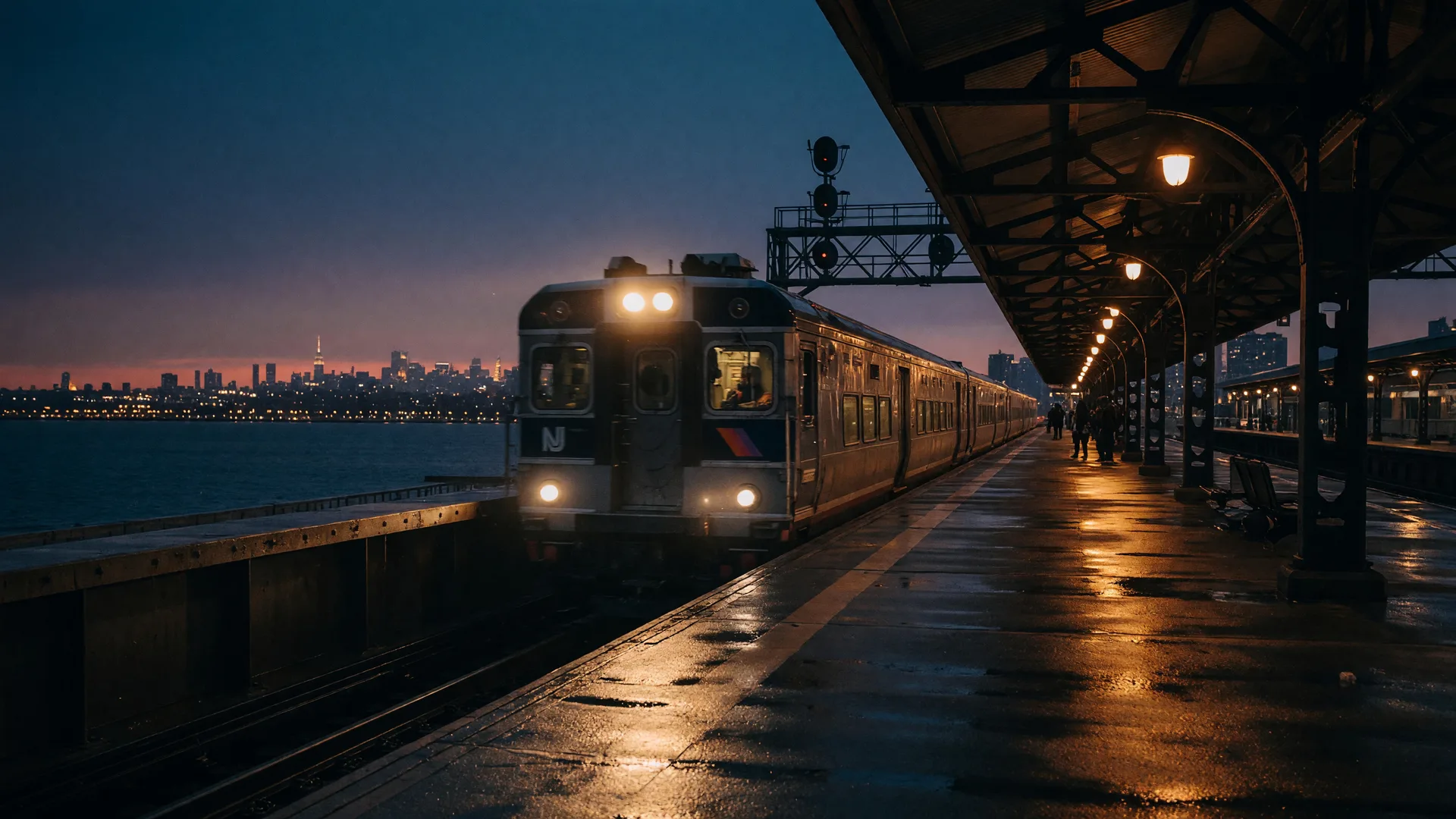
Tunnel Boring Started on the Gateway Project: What the New Hudson Tunnel and the 2026 Fare Hike Mean for North Jersey Home Values

Tunnel boring for the Gateway Program's new Hudson River rail tunnel started on September 28, 2026, in North Bergen. It is the first new rail tunnel under the Hudson in more than a century, and it is the biggest transportation story for North Jersey commuters in decades. Combined with NJ Transit's 3% fare increase on July 1, it changes the math for anyone who owns a home in a commuter town in Passaic or Bergen County. I am Johnny Rodriguez, North Jersey's first AI-Certified Realtor, and I have spent over 15 years helping families buy and sell in Clifton, Paterson, Passaic, Woodland Park, Totowa, Haledon, and Garfield. Here is what the tunnel means for your commute and your home's value.
The Big News: Tunnel Boring Started in North Bergen
Here is the headline: the Gateway Development Commission began tunnel boring for the Hudson Tunnel Project in North Bergen on September 28, 2026. A tunnel boring machine is working its way under the Hudson right now, the first machine to do this work in over 100 years. The project had a scare earlier this year. Work was slated to stop on February 6 during the federal funding freeze, and construction did not resume until March. The big contracts are now in place: the Hudson River Tunnel Section was awarded in March 2026, and the New Jersey Surface Alignment followed in April.
The new tunnel is two tracks, and it is expected to be complete around 2035. When it opens, it will relieve more than 200,000 daily commuters and double rail capacity under the Hudson. And here is the part most people do not know: the current North River Tunnel is 116 years old, and once the new tunnel opens, the old one closes for a full rehabilitation. For the first time in over a century, the region is building its way out of the bottleneck instead of patching it.
Why This Is a Paterson, Clifton, Passaic, and Garfield Story
This is not a Manhattan story. The Main Line runs right through our towns: Paterson, Clifton, Passaic, and Delawanna all have stations on it, Garfield is on it too, and Plauderville in Garfield sits on both the Main Line and the Bergen County Line. The Bergen County Line carries commuters from Fair Lawn, Glen Rock, Ridgewood, and the rest of Bergen County into the same chokepoint. Every rider on those lines transfers at Secaucus Junction and then crosses the Hudson through that 116-year-old tunnel.
That tunnel is the single biggest bottleneck on the Northeast Corridor, and it is the reason NJ Transit rail has a reliability problem. A Bloomberg analysis of real-time data found NJ Transit is the least reliable commuter railroad serving New York, with roughly one in every 18 trains delayed 15 minutes or more or canceled outright. For a commuter from Clifton or Paterson, that means a bad morning about every two weeks. The Gateway tunnel does not just add capacity. It fixes the reliability problem, because it gives trains a second way under the river when the old tunnel needs repairs.
The Fare Increase That Landed First
Before the tunnel arrives, the fare increase did. On July 1, 2026, NJ Transit raised fares 3% systemwide, across trains, buses, light rail, and Access Link. It is the second straight annual 3% increase under the policy the board adopted in 2024: fares went up 15% in July 2024, 3% in July 2025, 3% this July, and they are scheduled to rise 3% every July 1 from here on, with no end date. The board also adopted a record $3.5 billion operating budget on July 16. PATH riders felt it too, with a 25-cent increase on May 4.
Nobody likes paying more to get to work, and I am not going to spin it. But there is a difference between a surprise and a schedule. The 3% annual increase is now completely predictable, and it funds the very system the new tunnel will feed. That is the tradeoff at the heart of this story: riders in our towns are paying more today so the region can build the capacity that makes the commute reliable by 2035.
What This Means for Home Values
Here is the real estate part, and it is the part I watch closest. Commute time and transit reliability are two of the strongest drivers of home value in North Jersey. Homes within walking distance of a rail station carry a measurable premium over comparable homes that need a car to reach the train, and towns with direct, reliable service to New York consistently outprice towns without it.
The market numbers say both counties are already moving. Bergen County's median sale price sat near $755,000 in early 2026, up about 7% year over year. Passaic County's median came in around $600,000 in the second quarter, up about 6%, and August data showed it near $650,000 with single-family closings up almost 9%. Passaic County is the affordability play with rail access: Clifton, Paterson, Passaic, and Garfield all have stations on lines that feed the tunnel, at prices well below Bergen County.
The 2035 timeline matters for buyers. The tunnel's value does not arrive all at once, it compounds. Every year of construction is a year the region gets closer to a reliable, doubled-capacity crossing, and the towns with stations on the Main Line and the Bergen County Line are the ones that benefit most when it opens. Buyers who buy near those stations now are buying the future commute at today's prices.
What Buyers and Sellers Should Watch
For buyers, two things. First, build the fare policy into your budget: plan on a 3% increase every July 1, not a one-time bump. Second, take station proximity seriously, because reliability is the direction the region is heading, and homes near the stations are the ones that capture the upside.
For sellers, the transit story is part of your marketing. If your home is within walking distance of the Clifton, Paterson, Passaic, Delawanna, or Plauderville station, that is a selling point with a decade of construction behind it. When a buyer asks about the commute, the honest answer is getting better, and the proof is in the ground in North Bergen.
And for everyone, watch the service improvements that come before 2035. NJ Transit has committed to reliability work now, not just after the tunnel opens, and the record budget funds it. Better on-time performance in the next few years will show up in buyer demand before the first train ever runs through the new tunnel.
The goal is not just to close, it is to help you win. Talk soon.
Want to Know What Transit Means for Your Home's Value?
I track these projects because they are part of what I do. If you are buying or selling in Clifton, Paterson, Passaic, Woodland Park, Totowa, Haledon, Garfield, or anywhere else in Passaic and Bergen County, I will show you what the commute story means for your price. Free consultation, no pressure, straight answers.
Questions? Text Johnny.
Questions? Text or call Johnny Rodriguez at 973-390-7319. He answers fast and gives it to you straight, whether you are buying, selling, or sorting out an inherited property in North Jersey.
Keep reading
More guides from Johnny on buying, selling, and investing across North Jersey.
North Jersey's AI-Certified Realtor with 15+ years of experience. Specializing in probate sales, short sales, and distressed properties in Passaic and Bergen County.