
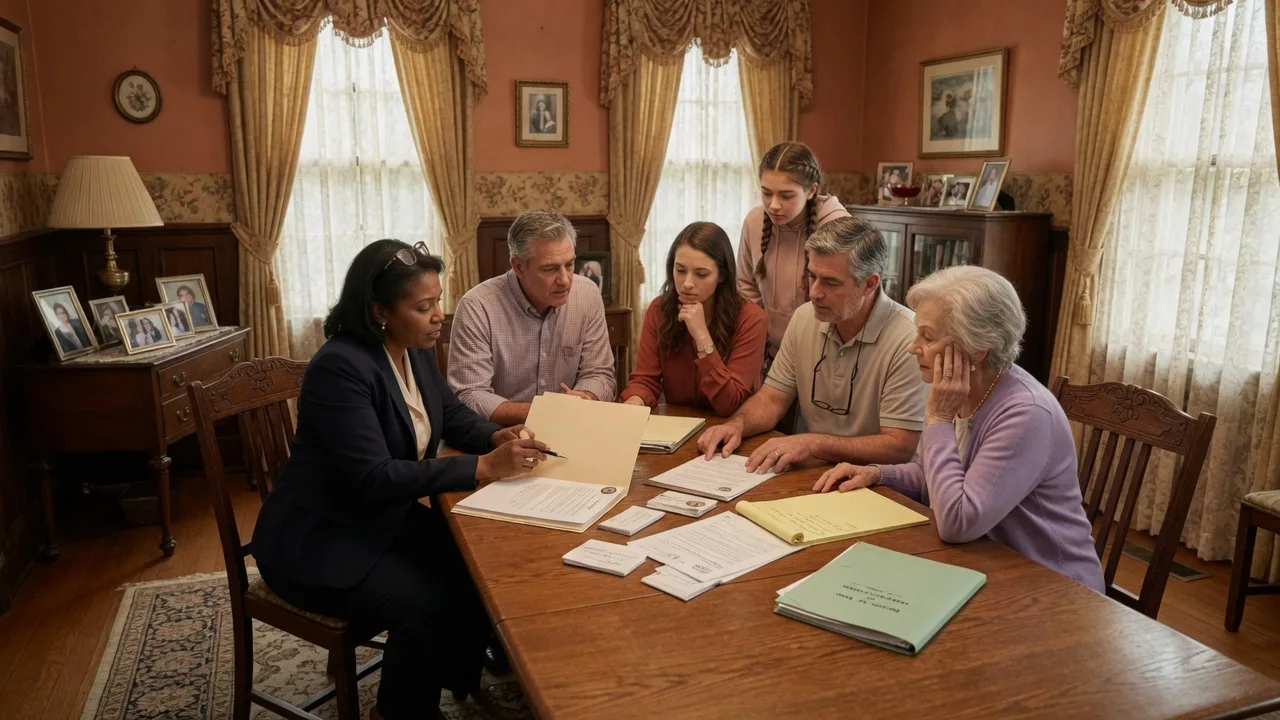
Executor's Roadmap to Selling Inherited Property in North Jersey

If you have been named executor of an estate in Passaic or Bergen County and the estate includes a house, you are about to learn why New Jersey probate is not something you want to navigate alone. I have been a Probate Certified Specialist for over 15 years, and I have walked dozens of families through this exact process in Clifton, Paterson, Passaic, Woodland Park, Totowa, Haledon, and Garfield. Every estate is different, but the roadmap for selling an inherited property is the same. Here is exactly what you need to know, from the day you are appointed executor to the day the property closes and the proceeds are distributed.
Step One: Getting Appointed as Executor
Before you can do anything with the property, you need legal authority. If the deceased left a will naming you as executor, you take that will to the Surrogate's Court in the county where the deceased lived. Passaic County Surrogate's Court is at 77 Hamilton Street in Paterson. Bergen County Surrogate is at 1 Bergen County Plaza in Hackensack. You will file the original will, pay a filing fee (usually a few hundred dollars depending on the estate size), and the court will issue Letters Testamentary. That document is your legal proof that you have the authority to act on behalf of the estate.
If there is no will, the process is called intestate administration. You file for Letters of Administration instead. The court will determine who has priority to serve as administrator, usually a spouse or adult child. This takes a bit longer because the court needs to verify the family tree and confirm there are no competing claims. Either way, you cannot list a property for sale, sign a contract, or even get information from the mortgage lender until you have those letters in hand. Do not try to shortcut this step. I have seen estates where someone started showing the property or accepting offers before they had legal authority, and it created title problems that delayed closing by months.
Step Two: The NJ Probate Timeline
New Jersey probate is not the fastest process in the country, but it is not the slowest either. Here is a realistic timeline based on what I see in Passaic and Bergen County. The executor appointment takes two to four weeks if the paperwork is clean. The creditor notification period is nine months from the date of death. During those nine months, creditors can file claims against the estate. You cannot distribute proceeds to heirs until this period passes, unless you set aside funds to cover potential claims. The property sale itself can happen during this period, and often does. The sale proceeds are held in the estate account until the creditor period expires.
The total probate timeline from start to finish is typically six to twelve months for an uncomplicated estate. If there are disputes among heirs, title issues, or tax complications, it can stretch to eighteen months or longer. The biggest variable is how quickly you get the property listed and sold. In a strong market like the one we have right now in Passaic County, where single-family homes sell in a median of about 29 days, you can close the sale within 60 to 90 days of listing. That means the sale itself is not the bottleneck. The bottleneck is getting through the legal and administrative steps that have to happen before and after the sale.
Step Three: Tax Implications You Cannot Ignore
New Jersey has an inheritance tax that catches out-of-state heirs by surprise almost every time. Here is how it works. If the beneficiary is a Class A beneficiary (spouse, child, grandchild, parent), there is zero inheritance tax owed. That is the good news for most heirs. But if the beneficiary is a sibling, niece, nephew, or someone who is not a direct descendant, the tax rate ranges from 11% to 16% on amounts over certain thresholds. Siblings get a $25,000 exemption. Everyone else in Class C gets a $500 exemption. Anything above those exemptions is taxed.
New Jersey does not have a state-level estate tax anymore. That was eliminated in 2018. So for most estates, the inheritance tax is the main concern, not the estate tax. On the federal side, the estate tax exemption is over $13 million as of 2026, so virtually no one in North Jersey is paying federal estate tax unless the estate is worth many millions.
Capital gains are a different story. When you inherit a property, you get a step-up in basis to the fair market value on the date of death. That means if the house was worth $500,000 when your parent passed away, and you sell it for $520,000, you pay capital gains tax on only the $20,000 of appreciation, not on the full sale price. If the house was purchased for $100,000 thirty years ago, the step-up saves you tens of thousands of dollars in capital gains. This is one of the most important tax advantages of inheriting property, and I have seen families miscalculate it and stress out over a tax bill that does not actually exist.
The executor also needs to handle the New Jersey tax waiver. The state Division of Taxation issues a tax waiver (Form L-8 or L-9) that confirms no inheritance tax is due or that it has been paid. The title company will require this waiver before they can close the sale. Getting it takes time, usually four to eight weeks, so you need to start that process early. I always tell executors to file for the waiver the same week they get their Letters Testamentary, not three weeks before closing.
Step Four: Working With Executors and Estate Attorneys
As the executor, you are a fiduciary. That means you are legally required to act in the best interest of the estate and its beneficiaries. You cannot make deals with yourself. You cannot sell the property to a family member below market value without court approval. You cannot distribute assets to heirs before the creditor period expires. Every financial decision you make needs to be documented and defensible.
You need an estate attorney who handles probate in the county where the deceased lived. This is not optional. The estate attorney handles the court filings, the tax waivers, the creditor notifications, and the final accounting. You also need a real estate agent who specializes in probate sales. I work with estate attorneys regularly. We coordinate the timeline so that the property sale and the probate process stay in sync. The attorney handles the legal side. I handle the property side. And we communicate weekly so nothing falls through the cracks.
One thing I see executors struggle with is knowing what they are allowed to spend estate money on. The answer: you can spend estate funds on any expense that preserves or maintains estate assets. That includes the mortgage, property taxes, insurance, utilities, necessary repairs, the estate attorney's fees, and my commission for selling the property. You cannot spend estate funds on personal expenses for the heirs, and you cannot make gifts from the estate before the creditor period expires. Keep every receipt. Document every expense. The beneficiaries are entitled to a full accounting when the estate closes, and you do not want to be in a position where you cannot explain where the money went.
Step Five: Clearing Out the Estate
Clearing out a loved one's home is one of the most emotionally difficult parts of this process. It is also one of the most practical. You cannot show a house effectively when every room is filled with furniture, boxes, and personal belongings. Buyers need to see the space. They need to visualize their own furniture and their own lives in the house. When a home is cluttered with someone else's possessions, that visualization does not happen.
Here is how I advise executors to handle it. First, the heirs should go through the house together and take what they want. This is the sentimental pass. Photographs, heirlooms, jewelry, documents, and personal items with family value. Give everyone a fair chance to claim meaningful items, and document who took what to avoid conflict later. Second, bring in an estate sale company for anything of value that nobody wants to keep. Furniture, antiques, collectibles, tools, and kitchenware can all be sold through a professional estate sale. The proceeds go into the estate account. Third, donate what is left to a local charity. Organizations like the Salvation Army, Habitat for Humanity ReStore, or veterans charities will pick up donations. Fourth, hire a junk removal company for whatever is left. In Passaic County, companies like 1-800-GOT-JUNK and local haulers will clear out the entire house in a day. The cost typically runs a few hundred to a couple thousand dollars depending on the volume.
The estate pays for all of this. The executor does not have to do it out of pocket. And the money spent on clearing the house is almost always worth it because a clean, decluttered home sells faster and for more money than a hoarded or overstuffed one. I have seen this make a $30,000 to $50,000 difference in final sale price on properties in Paterson and Clifton.
Step Six: Handling Multi-Owner Properties
This is where most of the conflict happens. When multiple siblings or relatives inherit the same property, they rarely agree on what to do with it. One wants to sell. One wants to keep the house as a rental. One wants to move in. One lives out of state and just wants their cash. None of them are wrong, but they need to find a path forward, and as the executor, it is not your job to force a decision. It is your job to present the options and let the beneficiaries decide.
Option one: sell the property and split the proceeds. This is the cleanest solution. The property is sold on the open market, the mortgage and expenses are paid off, and the remaining cash is distributed to the heirs according to the will or intestacy laws. Option two: one heir buys out the others. The heir who wants to keep the property gets an appraisal, pays the other heirs their share of the equity, and assumes ownership. This requires the buying heir to have cash or qualify for a mortgage. Option three: the heirs hold the property jointly as a rental. This only works if all of them agree on a property manager, understand the ongoing costs, and have a plan for what happens when someone wants out later.
When heirs cannot agree, the situation gets complicated. In extreme cases, one heir can file a partition action in Superior Court to force the sale of the property. This is expensive, time-consuming, and it destroys family relationships. I have seen it happen in Totowa and Woodland Park. It is avoidable if everyone communicates honestly and understands that holding onto the property for sentimental reasons while blocking a sale is not fair to the other heirs.
My advice to executors dealing with multi-owner situations: get everyone in a room (or on a video call) early. Lay out the numbers. Show them what the property is worth, what it would sell for, what the costs are, and what each person's share would be. When heirs see concrete numbers instead of vague ideas, they are much more likely to make a rational decision. If they still cannot agree, suggest mediation. A neutral third party can often find a compromise that nobody thought of on their own.
Common Probate Challenges and How to Avoid Them
I have been doing this long enough to know where probate sales get stuck. Here are the most common problems I see, and how to handle them before they become crises.
Title issues. An old mortgage that was never satisfied. A second mortgage the family did not know about. A lien from an unpaid contractor. A property that was owned jointly but never properly titled. A full title search early in the process reveals all of these, and the estate attorney can work with the title company to clear them before closing. If you wait until a buyer is under contract to discover a title issue, you risk losing the buyer and starting over.
Unpaid property taxes. In Passaic County, property taxes that go unpaid become a lien that takes priority over the mortgage. The executor needs to find out the tax status immediately and make arrangements to pay any arrears. In some cases, the estate can negotiate a payment plan with the tax collector.
Code violations. An inherited property that has been vacant or poorly maintained might have code violations from the municipal building department. These need to be addressed before the property can be sold to a conventional buyer. Sometimes I recommend selling the property as-is to an investor or cash buyer who is willing to take on the violations. Other times, the estate makes the necessary repairs to get the property market-ready.
Probate court approval. In New Jersey, if the property is sold through probate, the sale may need court confirmation. This is not always required, but when it is, it adds a layer of process. The court reviews the sale price to make sure it is fair and in the best interest of the estate. Having a professional appraisal and a market analysis from a licensed agent helps the court approve the sale quickly.
Out-of-state heirs. When one or more heirs live in another state, coordinating decisions, signatures, and communication gets harder. Remote notarization is allowed in New Jersey since the pandemic, which helps. But it still takes longer to get documents signed and returned. Plan for this. Add two to three weeks to your timeline for every out-of-state heir.
The Bottom Line
Selling an inherited property in New Jersey is not easy. But it is straightforward if you follow the right steps in the right order. Get your Letters Testamentary. Hire a probate attorney and a probate-specialist agent. Clear the property. Identify and resolve title and tax issues. Communicate honestly with all the heirs. And move through the process deliberately without rushing or dragging your feet.
I have been doing probate sales in Passaic and Bergen County for over 15 years. I know the Surrogate's Court process, the tax waiver timeline, the estate cleanout logistics, and how to handle multi-owner disputes. I work with experienced estate attorneys who know the local courts, and I communicate with them every step of the way so nothing gets missed. If you are an executor trying to figure out how to sell an inherited property, or if you are an heir who wants to understand what the executor should be doing, I can help.
Need to Sell an Inherited Property in North Jersey?
As a Probate Certified Specialist with 15 years of experience in Passaic and Bergen County, I help executors and families navigate the probate sale process from start to finish. Free consultation, no pressure, just honest advice about your situation.
North Jersey's AI-Certified Realtor with 15+ years of experience. Specializing in probate sales, short sales, and distressed properties in Passaic and Bergen County.