Bergen County Light Rail, Paramus Housing Boom | North Jersey 2026

I have been selling real estate in North Jersey for over 15 years, and I have learned that the biggest shifts in property values do not happen because of what is happening on your block. They happen because of what is happening a few towns over. A new transit station, a major housing development, a corridor revitalization. These changes ripple outward, and homeowners who pay attention early are the ones who benefit most. Right now, Bergen County is in the middle of several massive projects that are going to reshape the region, and if you own property anywhere in Passaic or Bergen County, you need to understand what is coming and how it affects you.
The Hudson-Bergen Light Rail Is Coming to Bergen County
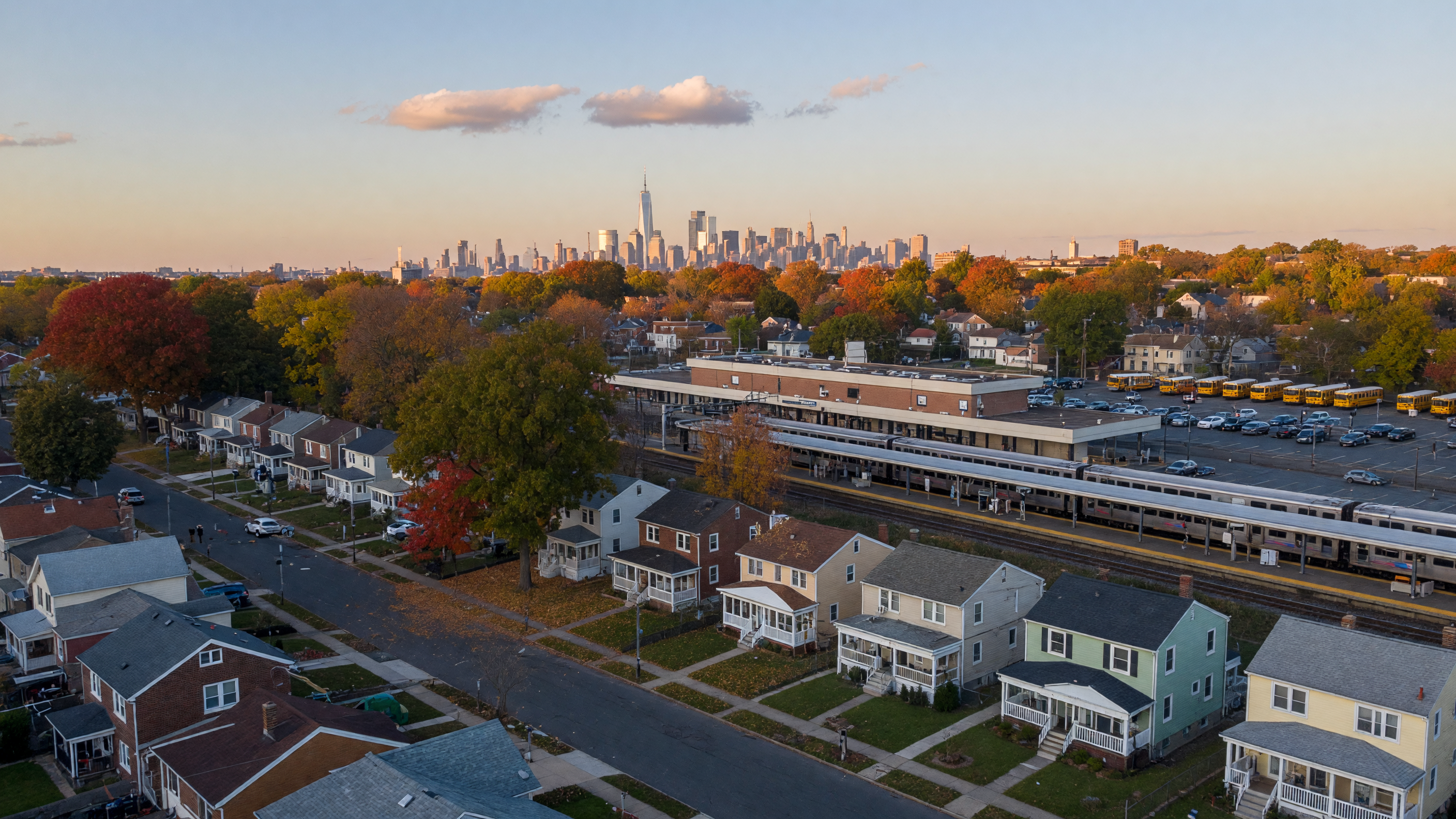
This is the single biggest infrastructure project on the horizon for North Jersey. NJ Transit issued a Request for Proposals in late 2025 to begin the environmental impact study for a 10-mile extension of the Hudson-Bergen Light Rail into Bergen County. The proposed route would add seven new stations running from North Bergen all the way to Englewood Hospital, serving municipalities like Ridgefield, Palisades Park, and Leonia.
If you have been watching what happened to property values along the existing Hudson-Bergen Light Rail in Hudson County, you already know what this means. Hoboken, Jersey City, and Bayonne all saw significant price appreciation once the light rail stations opened. Properties within a half-mile of a light rail stop historically command higher prices, sell faster, and attract more buyer interest than comparable homes farther from transit. That pattern is well documented in urban planning research, and there is no reason to think it will not repeat in Bergen County once the extension is built.
The timeline here is still years out. The environmental study alone will not be complete until 2026 at the earliest, and construction will take several years after that. But the signal has been sent. Investors and developers are already repositioning around the proposed station locations. For homeowners in towns along the route, even the announcement itself is a catalyst for rising values.
And for Passaic County homeowners, there is a spillover effect. As Bergen County becomes more transit-connected and more desirable, buyer demand pushes into neighboring Passaic County towns. Buyers who are priced out of Palisades Park or Fort Lee start looking at Clifton, Passaic, and Garfield. That increased demand is one of the forces driving prices up in our market right now.
Paramus: From Retail Capital to Housing Hub
If you know Paramus, you know it as the retail capital of New Jersey. Garden State Plaza, Bergen Town Center, Paramus Park. Millions of square feet of retail that have defined the town for decades. That identity is changing fast, and the scale of what is planned is hard to overstate.
Garden State Plaza: 1,400 Apartments
Westfield Garden State Plaza, one of the largest malls in the country, is expected to break ground in mid-2025 on a massive mixed-use redevelopment that would add up to 1,400 apartments alongside new retail. That is not a typo. One thousand four hundred new residential units at one of the most commercially valuable intersections in the state. The project represents a fundamental shift in how Paramus uses its land, moving from pure retail toward a live-work-play model that has transformed other suburban corridors across the country.
Bergen Town Center: 426 Units on a $25 Million Parcel
A parcel at Bergen Town Center sold for $25 million in 2025, with plans for a 426-unit mixed-use development combining residential units with retail space. This is part of a broader trend of mall redevelopments adapting to the reality that traditional retail alone cannot sustain these massive properties anymore.
Paramus Park: 360 Units Approved
Paramus Park Mall has already received approval for two apartment buildings totaling 360 units. Combined with the other projects, Paramus is looking at more than 2,000 new residential units within the next several years. On top of that, Paramus accepted its state-mandated affordable housing obligation in 2025, committing to build 1,000 new affordable housing units over the next decade. That is the largest affordable housing allocation in all of Bergen County.
What This Means for Homeowners
The sheer volume of new housing coming to Paramus will change the character of the town. More residents means more demand for local services, restaurants, and schools. It means more traffic in the short term, which is a real concern, and it means more transit ridership, which strengthens the case for expanded NJ Transit service. For current Paramus homeowners, the picture is mixed. Your property values benefit from the increased activity and investment, but you will be dealing with construction disruption and a changing neighborhood character for several years.
For homeowners in surrounding towns like Fair Lawn, Glen Rock, Ridgewood, and even across the Passaic County line in Clifton and Garfield, the Paramus development boom creates upward pressure on your home values. As Paramus builds more housing, it absorbs demand that might otherwise push buyers into your neighborhood. But it also raises the profile of the entire area as a desirable place to live, which benefits everyone in the market.
Hackensack: The Bergen Junction Workforce Housing Project
The Bergen County government approved an $8 million-plus mixed-use redevelopment in downtown Hackensack in early 2025. The project, called Bergen Junction, will include a 15-story residential tower with 168 workforce housing units. One hundred fifty-eight of those units are reserved for essential workers like police officers, firefighters, and nurses. Ten units are set aside for veterans.
The project also includes a modernized NJ Transit bus terminal with improved loading areas, retail space, and county offices. This is a downtown revitalization play. Hackensack has been working to transform its central business district for years, and Bergen Junction is the kind of anchor project that can shift perception and attract additional private investment.
For the real estate market, workforce housing near transit is one of the most in-demand property types in the region. These 168 units will not sit vacant. The professionals who live there will spend money downtown, ride transit to work, and contribute to the tax base. That kind of stable, employment-driven residential demand supports property values in the surrounding blocks and neighborhoods.
How Bergen County Changes Affect Passaic County Homeowners
This is the part that a lot of people miss. Real estate markets do not exist in isolation. What happens in Bergen County directly impacts Passaic County, and vice versa. When Bergen County builds 2,000 new apartments in Paramus, those units absorb a portion of regional housing demand. When the light rail extension brings transit access to northern Bergen County, it makes the entire northern New Jersey corridor more attractive to buyers relocating from New York City.
Here is what I am seeing on the ground. Buyers who started their search in Bergen County are increasingly expanding into Passaic County because prices in Bergen are climbing faster. A family that could not find a home in Fort Lee or Paramus for under $700,000 is now looking at Clifton or Woodland Park, where they can get more house for their money in a community with strong schools and easy highway access. That demand migration is one of the reasons Passaic County prices have been climbing as well.
The transportation improvements also benefit Passaic County indirectly. A better-connected Bergen County means better regional transit options for everyone. The proposed light rail extension would connect to NJ Transit bus routes that serve Paterson, Clifton, and Passaic. The I-80 reconstruction project spanning Passaic County improves commute times for anyone driving between the two counties. And the ongoing road and bridge repairs funded by nearly $9 million in state grants that Passaic County secured in late 2025 are part of the same regional infrastructure push.
School District Changes Worth Watching
Infrastructure and housing development grab headlines, but school districts drive home values more directly than almost any other factor. A few changes in our area are worth paying attention to.
In Passaic, construction on a new $328 million high school began after June 2025, temporarily displacing over 3,000 students during the build. A new, modern high school is a significant long-term investment in the city's educational infrastructure and a signal that the community is growing. In Little Falls, a new state law now allows school districts to finance capital projects through county improvement authorities, bypassing the voter referendum process. Little Falls is the first county district to use this method, and it could set a precedent for other districts struggling to fund school improvements.
Meanwhile, eight schools in Paterson and Passaic lost $7.9 million in federal grants after the Full-Service Community School program was cut in late 2025. These grants funded after-school programs, family services, and community support. The loss is real, and families in those neighborhoods will feel it. When school funding fluctuates, it affects enrollment patterns, which affects property values. Staying informed about these changes helps you make better decisions about when and where to buy or sell.
The Big Picture for North Jersey Real Estate
When I look at everything happening across Bergen and Passaic County right now, the message is clear: this region is investing in itself at a scale we have not seen in decades. Transit expansion, housing development, infrastructure repair, school construction, and downtown revitalization are all happening at the same time. That kind of coordinated investment drives long-term property value growth.
If you own a home anywhere in North Jersey, these changes are working in your favor. The key is understanding which changes affect your specific property and neighborhood, and timing your decisions accordingly. Whether you are thinking about selling, buying, or investing, the data and the development pipeline tell the same story: demand is strong, supply is tight, and the infrastructure supporting these communities is getting better, not worse.
I track these developments every day because they directly impact my clients. When a light rail extension is announced, I need to know which neighborhoods will benefit. When a major housing project is approved, I need to understand how it changes the competitive landscape. That kind of local intelligence is what separates an agent who knows the market from an agent who just works in it.
Want to Know What These Changes Mean for Your Home?
I will walk you through how the new developments, transit projects, and housing changes affect your property value. No obligation, no pressure. Just honest analysis from someone who lives and works in these neighborhoods every day.
Schedule a Free Property Consultation North Jersey's AI-Certified Realtor with 15+ years of experience. Specializing in probate sales, short sales, and distressed properties in Passaic and Bergen County.